
Confirm panel profile first
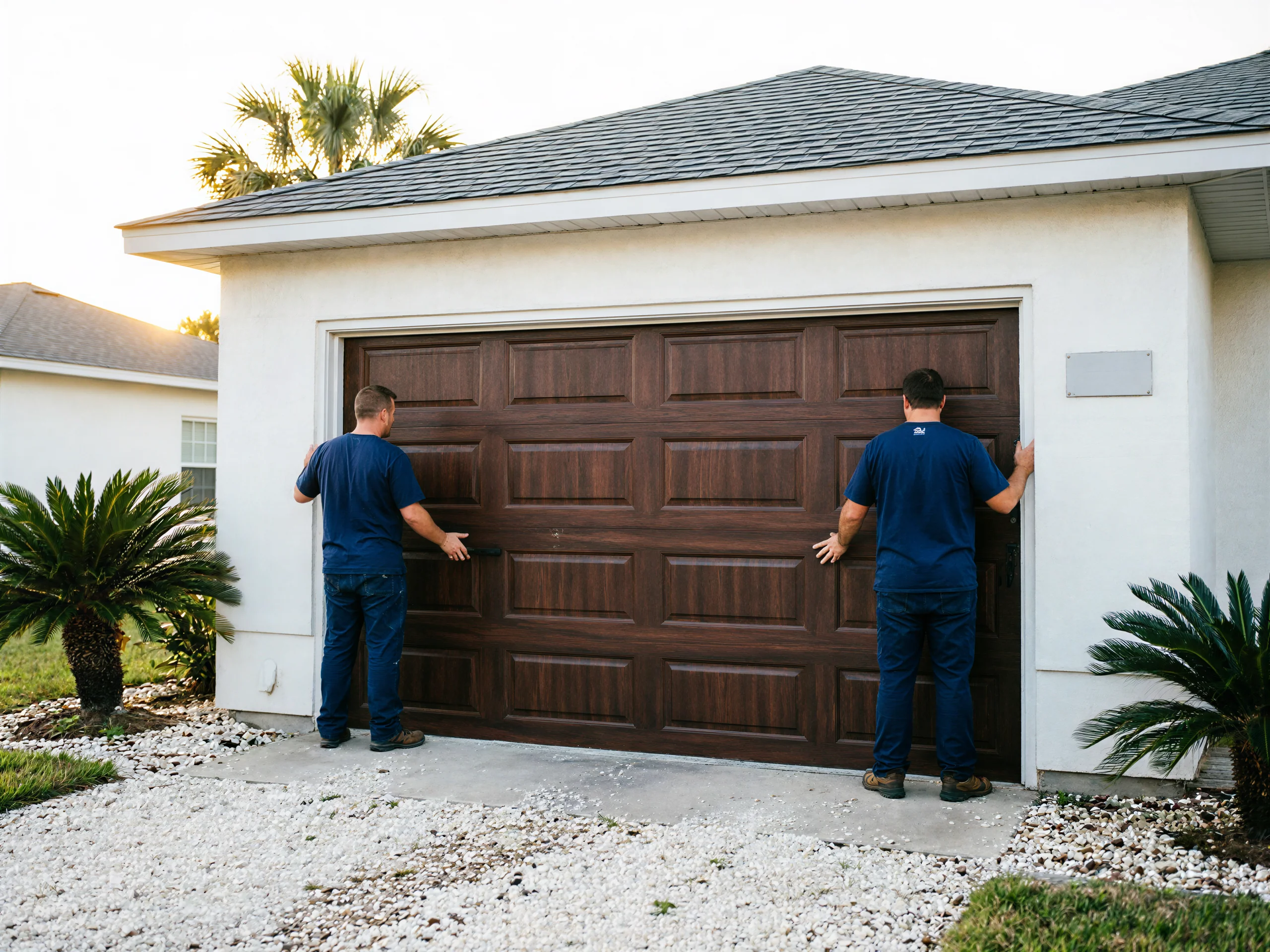
When someone calls about a dented or buckled panel, we ask what the door looks like before we leave, because showing up with the wrong panel profile means a second trip and nobody wants that.
 Sanford, FL
Debary, Sanford
Panel replacement for DeBary's mid-90s steel sectional doors, done by a crew that drives the 7 miles out from Sanford. Matched panels, not mismatched guesses.
Warning signs
DeBary sits seven miles out from our Sanford shop, close enough that a panel job doesn't turn into a half-day trip, but far enough that we build the drive into how we quote the call.
When someone calls about a dented or buckled panel, we ask what the door looks like before we leave, because showing up with the wrong panel profile means a second trip and nobody wants that.
Most of what we see in DeBary is steel sectional doors, the kind that went up when the area was mostly built out - median year built here is 1994, a good decade newer than the broader Sanford service area's 1984 median. That later build date matters: these are raised-panel steel doors on roller tracks, not the flat wood or early steel doors from the 60s and 70s we still find closer to Sanford's older pockets.
A cracked or caved-in panel on a DeBary door usually means one section of a factory-matched run, and the fix is finding that same profile, not patching whatever's on the truck. Damage shows up as a bowed bottom panel from a car bumper, a cracked middle section from a wind-driven branch, or a seam that's split where two panels meet after years of expansion and contraction.
Local causes
The climate here is mild and temperate - no hard freeze cycles, no major hail belt - so panels in DeBary don't fail from the weather extremes you'd worry about further north. What gets them is day-to-day contact: a trailer hitch backed in wrong, a bike rack clipping the bottom panel, a basketball hoop mounted too close to the track.
Because the housing stock here clusters around 1994, a lot of these doors are now entering their late twenties to early thirties, the stretch where steel starts to show fatigue at the stress points even without a single hard impact. The roll-formed ribs that gave the panel its strength when new start to oxidize at the seams, and a glancing hit that wouldn't have dented a newer door will crease an older one.
With roughly 9,420 households in DeBary, we're not dealing with a single housing tract built by one builder on one date - there's enough spread in those three decades that panel widths and rib counts vary door to door, which is exactly why we confirm the panel style before we order.
The repair
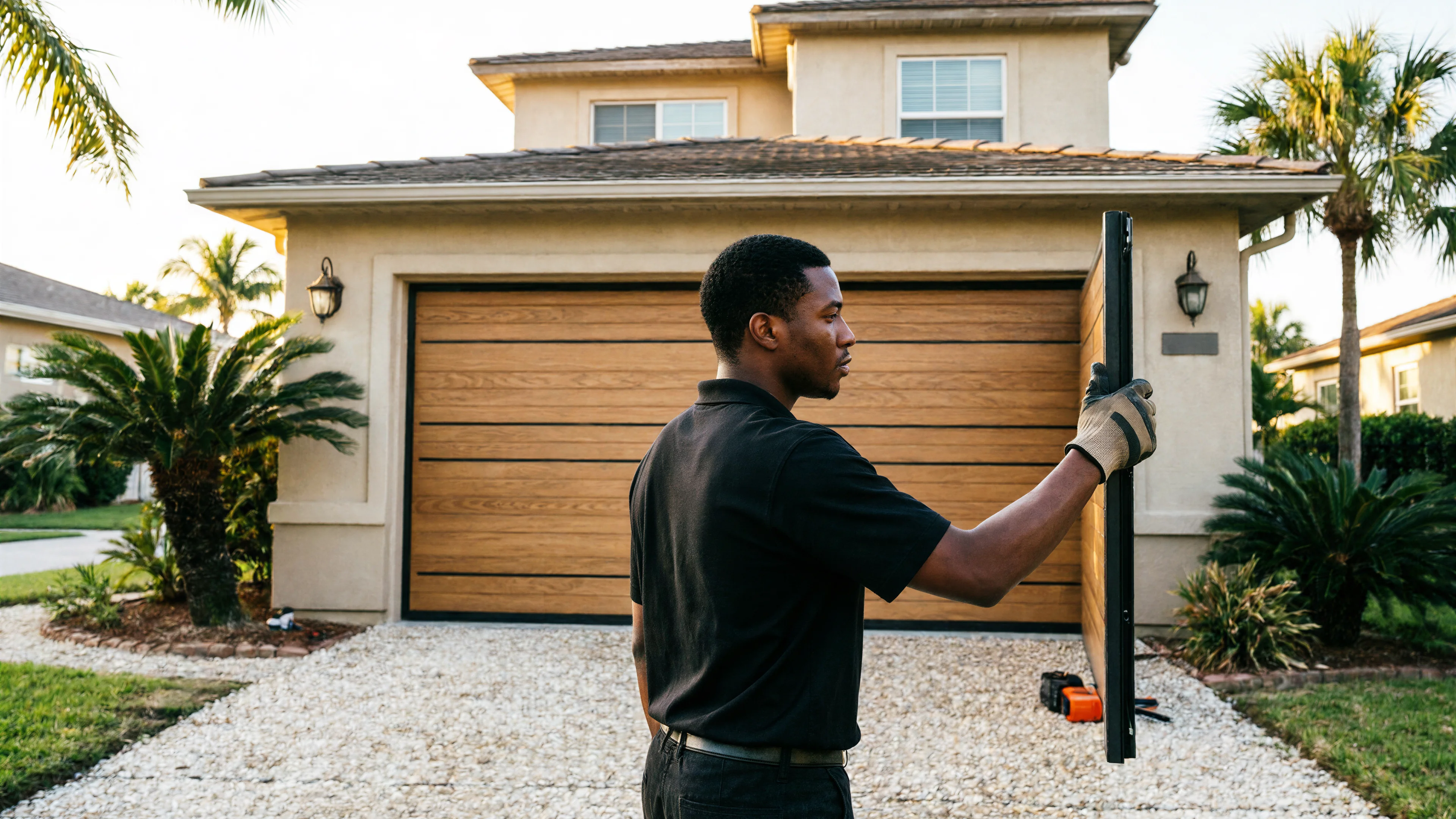
First step is matching the panel - width, rib pattern, and whether the door takes a short or long panel on that model. We don't stock every profile on the truck, so if your door's an uncommon run, we're ordering the matching section rather than installing a close-enough substitute that'll look wrong and seal poorly.
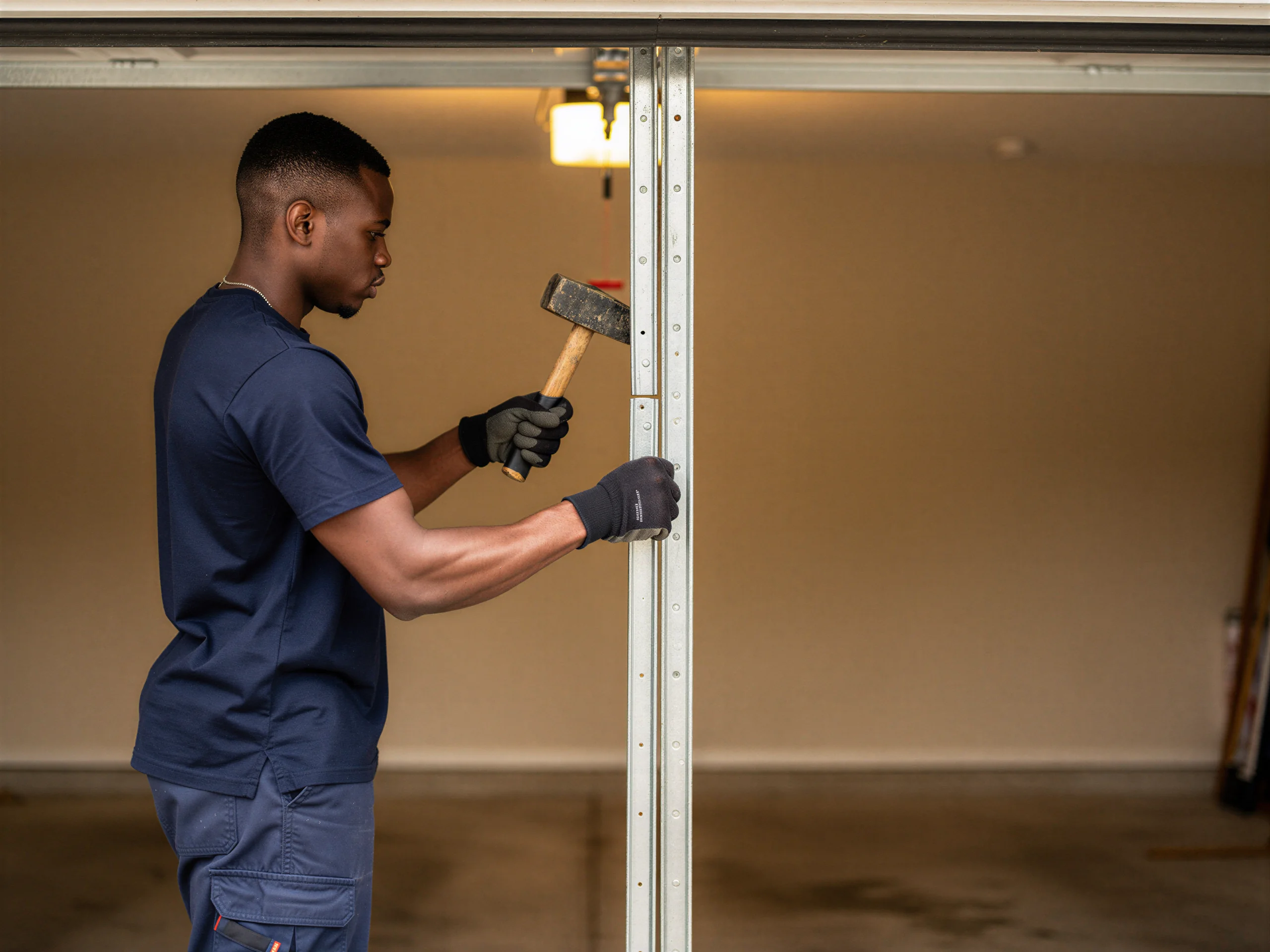
Once we have the right panel, the job is removing the track rollers from the damaged section, disconnecting it from the sections above and below, and sliding the new panel into the stack.
On a double door this means working carefully around the center stile so the door still tracks straight afterward. We check the hinges for play while the door's apart, since a bent hinge on an aging panel is often what let the dent happen in the first place.
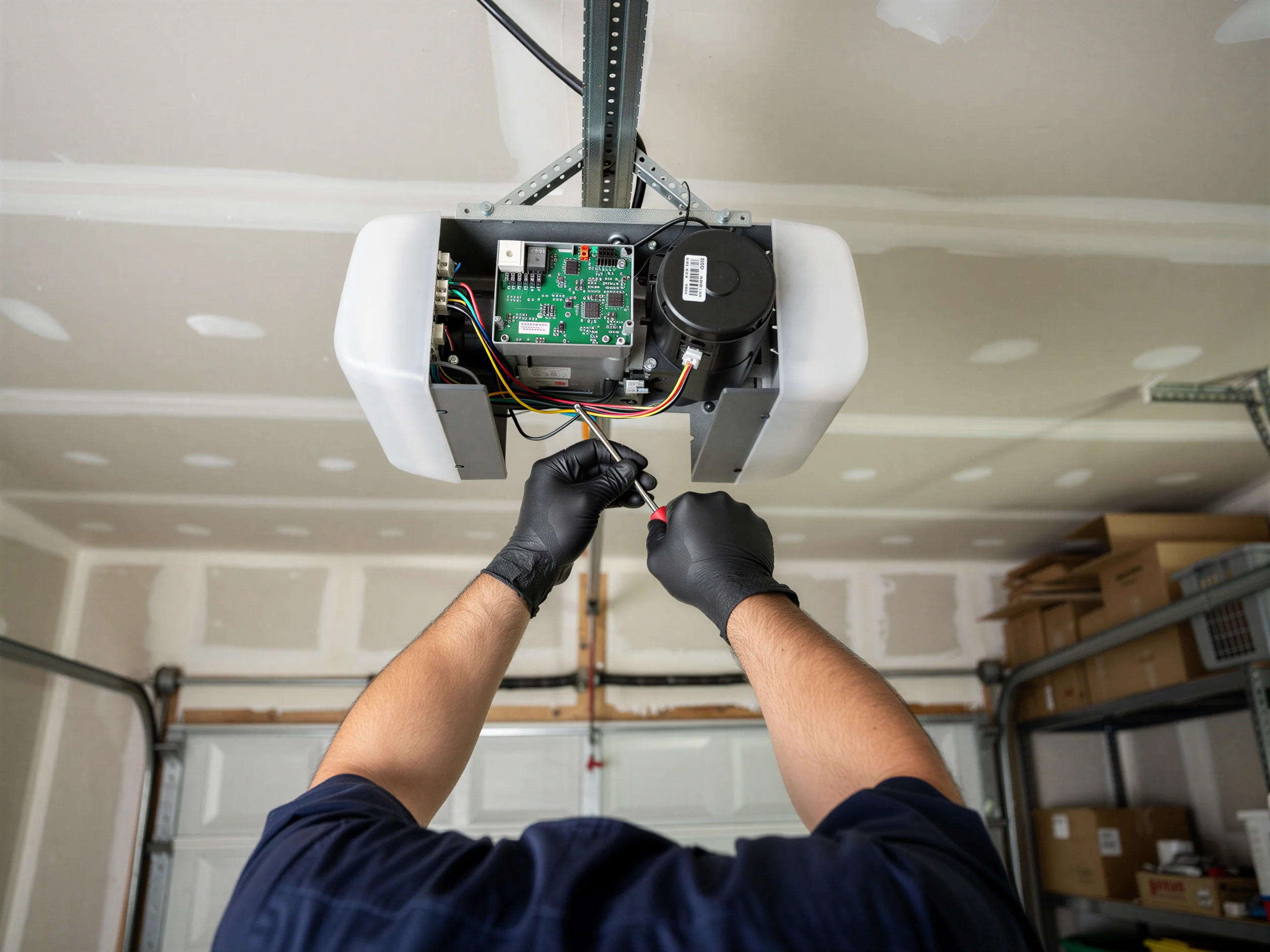
We test the balance and travel after reinstalling, because a new panel changes the door's weight distribution slightly, and an opener that was already working near its limit can struggle with that shift.
Timing
If we're carrying a common panel profile that matches your door, the swap itself is usually finished in under an hour once we're on site. The longer wait, when there is one, is upstream of the job: ordering a panel that isn't a stock size. We won't give a specific turnaround here since that depends on the manufacturer and the exact model, but we'll tell you on the call whether your door's a common size or a special order before we book the visit.
Given the seven-mile run from Sanford, we schedule DeBary panel jobs in blocks where it makes sense, so the travel time doesn't inflate what you're paying for labor. We're upfront if a day doesn't have a convenient slot - we'd rather tell you that than rush a panel swap.
Watch-outs
The honest limitation: if your door is old enough or obscure enough that the manufacturer has discontinued that panel line, we may not be able to match it at all.
At that point patching one section on a mismatched door isn't worth doing - the color and rib profile will never line up, and you're better off replacing the whole door than babying one panel. Another complication is torsion spring sizing.
If the new panel is noticeably heavier or lighter than the section it's replacing - which happens if a prior repair used an off-brand panel - the door's spring tension may need adjusting to keep it balanced.
We check for that rather than assume the old spring setting still applies. And on doors from the earlier end of the area's 1966 to 2002 build range, we sometimes find brackets or hinges that don't match current hardware sizing, which adds a step but isn't usually a blocker.
On the truck
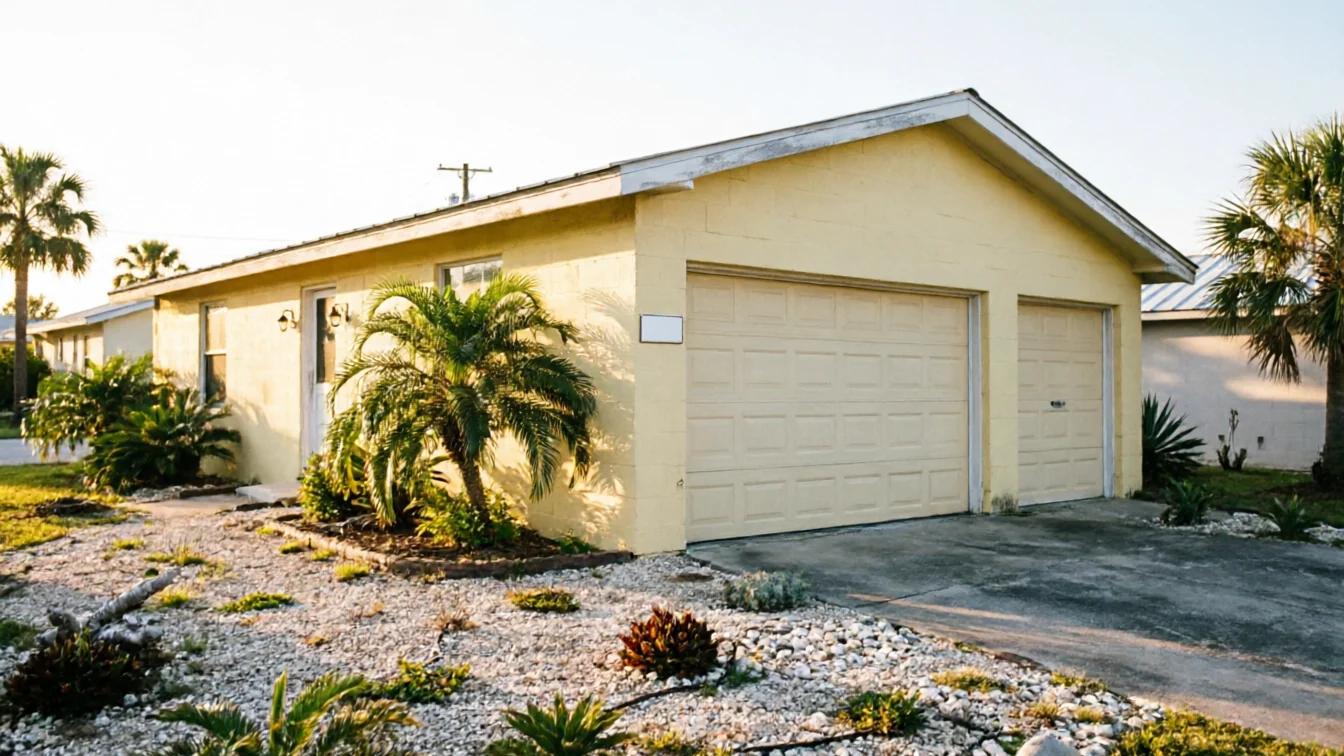
We carry common steel panel profiles that fit the raised-panel sectional doors typical of the mid-80s through 1990s builds across this area, along with matching hinges, end caps, and rollers sized to those doors. What we don't keep on the truck is every discontinued panel style or wood-composite panels from the oldest end of the area's housing stock - those get special-ordered once we've confirmed the exact model.
If your door's panel style is uncommon, we'll tell you that on the first look rather than after we've already made the trip out.
Questions
Often, yes. DeBary's housing stock centers on a 1994 median build year, and steel sectional panels from that era are a common profile we stock. We confirm the exact model and rib pattern before the visit so we're not guessing on site.
Depends on how old the door is and whether the panel's still made. If the style's discontinued, one mismatched panel looks wrong and we'll tell you replacing the door is the better move. If it's a common profile, swapping the one section is usually the cheaper route.
About seven miles. We factor that drive into how we schedule the visit, but it doesn't change the work itself - the panel match and the install are the same whether the door's three miles out or ten.
It can, if the new section is heavier or lighter than what was there before. We check the door's balance and the opener's response after the swap, since a shift in panel weight can strain an opener that was already near its limit.
Explore more
Ready when you are
Sanford Garage Door Pros repairs and installs garage doors, springs and openers in Sanford, FL and the surrounding area.