
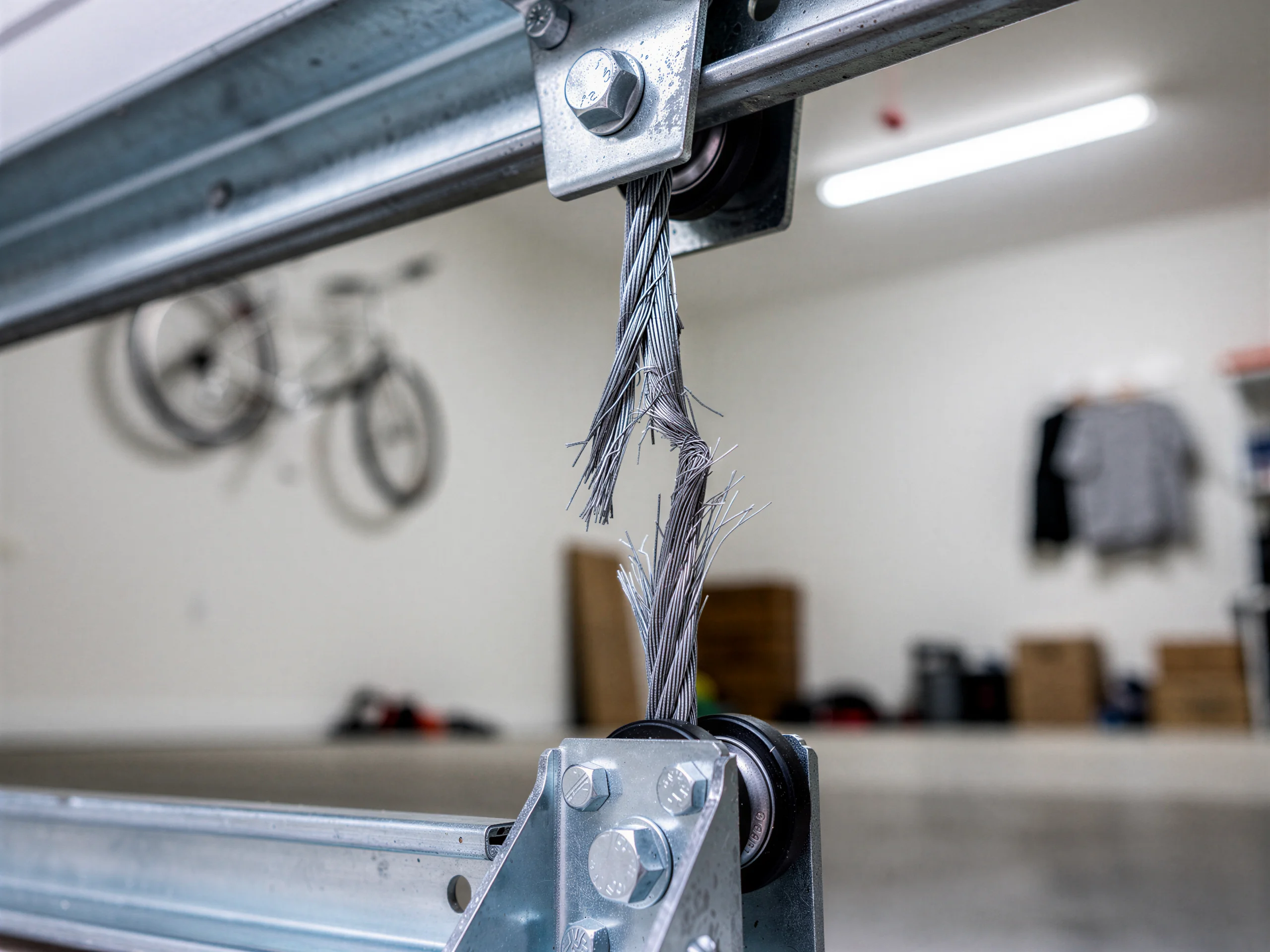
Tangled cable on shaft
That's a cable off the drum or snapped at the bottom bracket, not a dead opener. Sometimes the cable has unwound and tangled around the torsion shaft, and you'll hear a scraping or clicking sound before it finally lets go.
 Sanford, FL
Debary, Sanford
Cable repair for DeBary homes built around 1994, where sectional steel doors and torsion-drum cables are starting to fray. Serviced from Sanford, 7 miles away.
Warning signs
The call we get from DeBary is usually the same: the door drops crooked, one side lower than the other, or it won't lift past a foot before the opener strains and stops.
That's a cable off the drum or snapped at the bottom bracket, not a dead opener. Sometimes the cable has unwound and tangled around the torsion shaft, and you'll hear a scraping or clicking sound before it finally lets go.
DeBary's housing stock runs newer than a lot of the towns we cover from Sanford - the median build year here lands around 1994, well into the era of steel sectional doors on torsion springs rather than the older wood or fiberglass panel doors with extension springs you still find closer to downtown.
These doors use galvanized aircraft cable wound on drums at each end of the torsion shaft, and after 25-plus years the zinc coating wears thin at the drum groove. That's where the strands start to fray, long before the cable looks obviously bad from the ground.
Local causes
Three things wear a cable down on a door this age: drum groove wear, bottom bracket misalignment, and moisture. DeBary sits in the mild temperate band that covers this whole service area, so you're not dealing with freeze-thaw cycling that cracks cable coating the way it does farther north - but humidity still gets into the drum groove over the decades and speeds up corrosion at the exact spot where the cable flexes thousands of times a year.
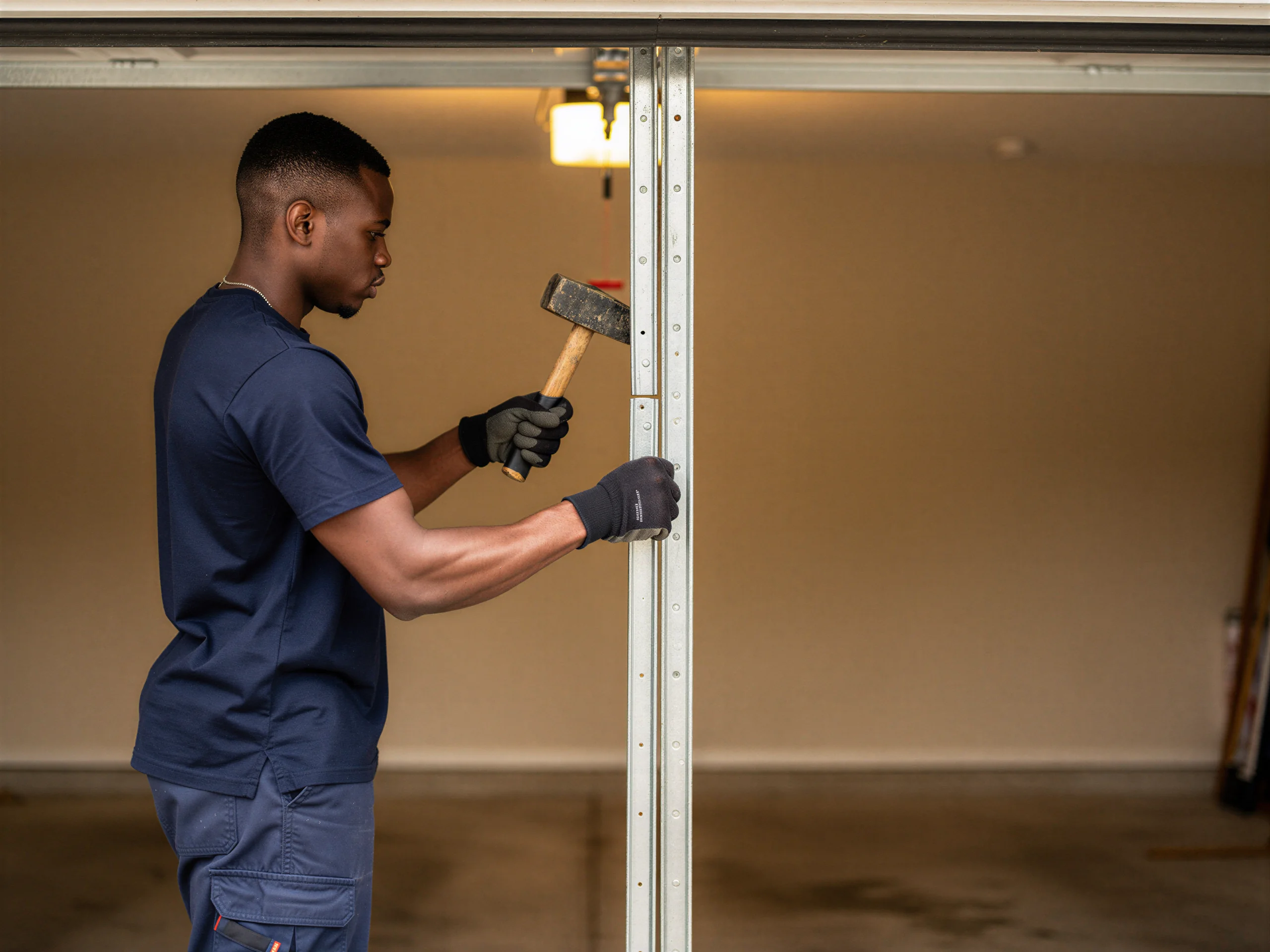
The other factor is track alignment. A door built in the early-to-mid '90s has had one or two opener swaps and probably a few bent track sections by now. Once the track is even slightly out of plumb, the bottom roller bracket pulls at an angle instead of straight down, and that uneven pull is what shears a cable at the bracket rather than wearing it evenly. We see this pattern often enough in homes from this build window that it's the first thing we check before touching the spring.
The repair
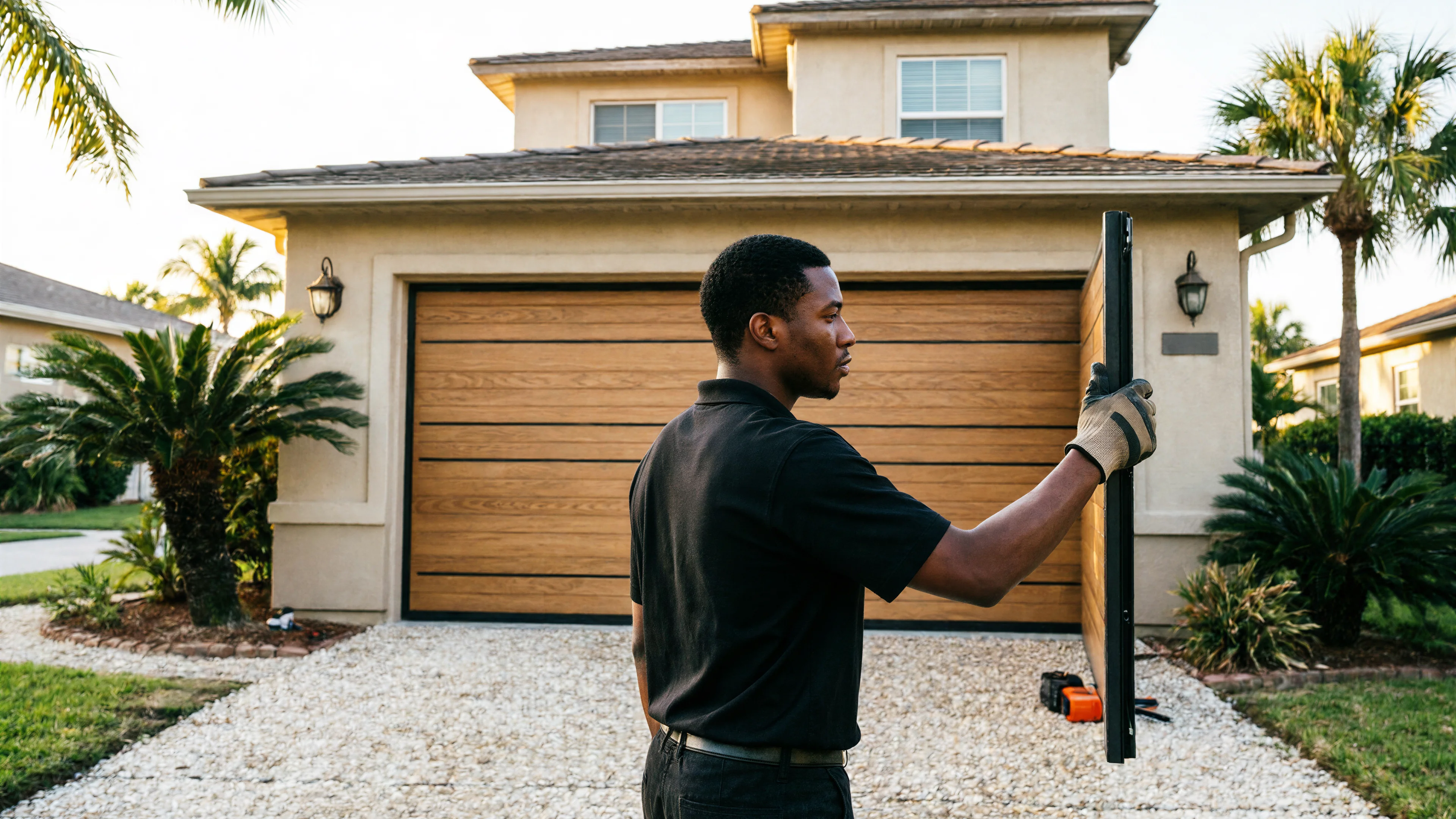
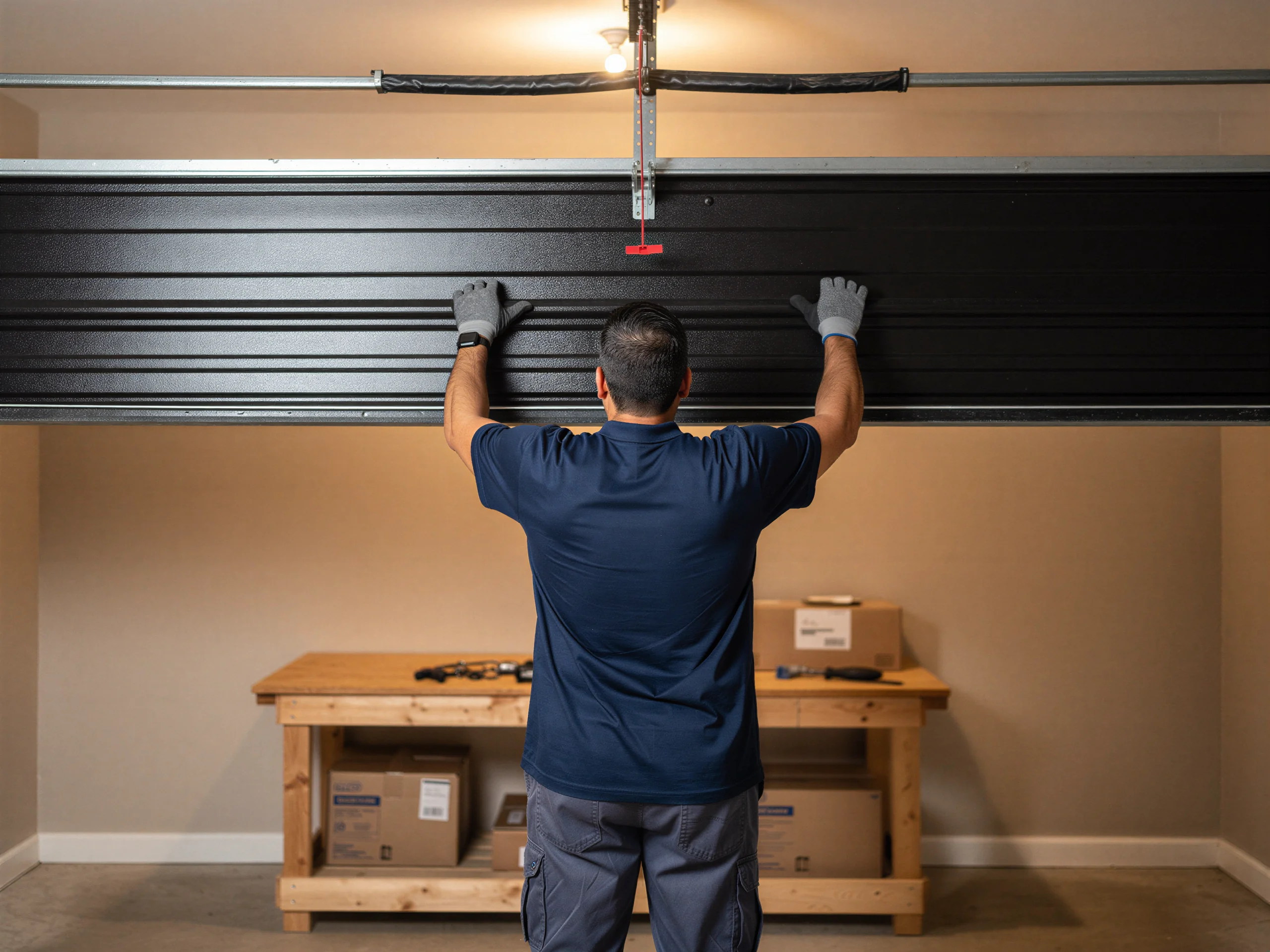
We pull both cables even on a double door, not just the broken one - a cable that's 25 to 30 years old on one side is close to failing on the other, and replacing one without the other is a callback waiting to happen.
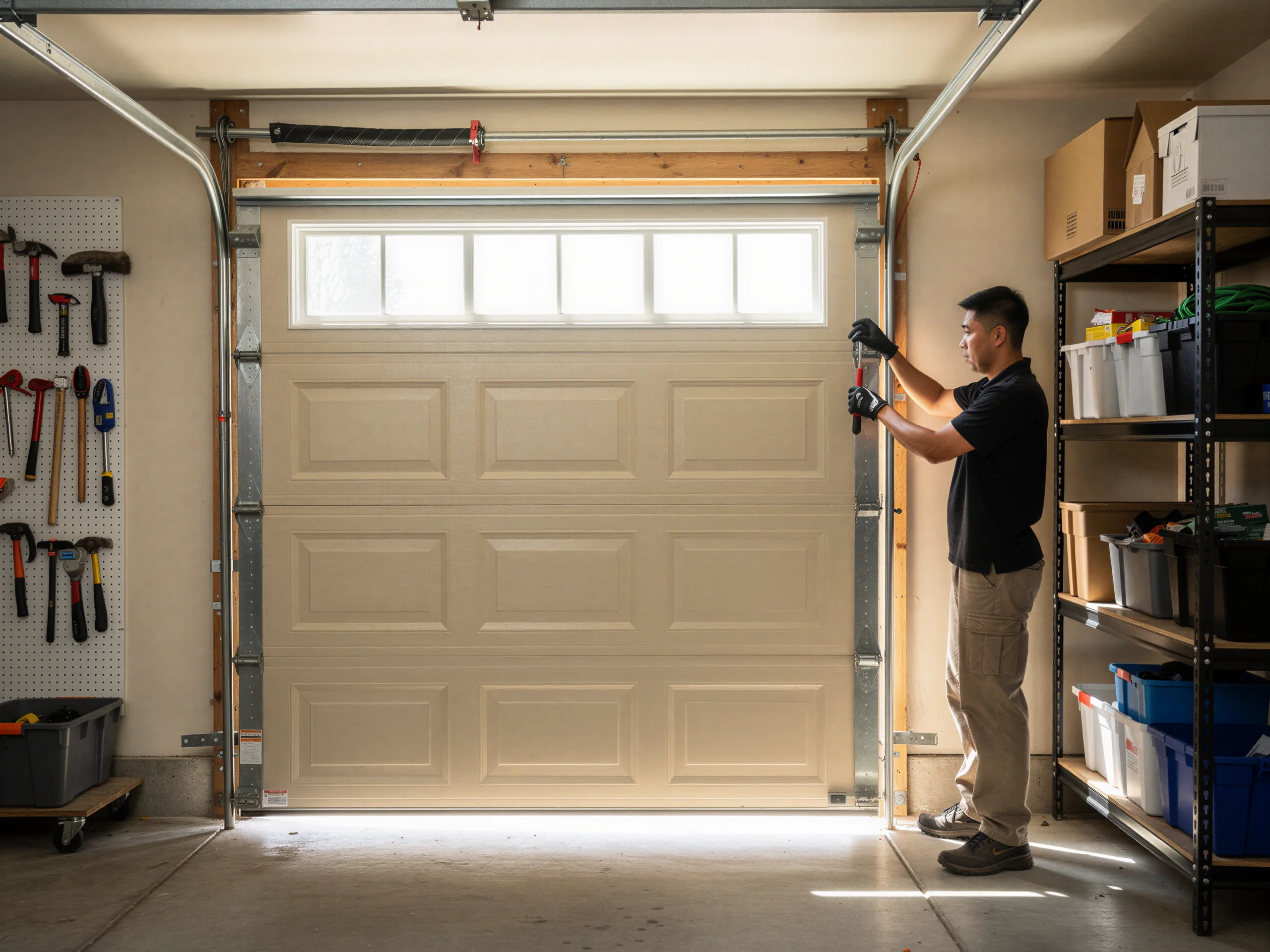
First the torsion springs get locked off with winding bars; you do not work near a wound spring with the door unsecured. Then the old cable comes off the drum, the drum groove gets checked for grooving or rust pitting, and a new galvanized cable goes on at the correct length for your door's track height.
If the bottom bracket shows wear from the misalignment that caused the break, that gets replaced too - reusing a worn bracket just sets up the next cable failure. We also check the track plumb while everything is open, since that's usually the root cause rather than the cable itself being defective.
Timing

A straightforward cable job on a double door, both sides, runs about an hour once the truck is on site. Add time if the drums are grooved and need replacing along with the cable, or if the track needs resetting - that can push it toward two hours. We come from Sanford, about 7 miles out, so plan on that drive time ahead of the repair window rather than assuming a same-block response.
Watch-outs
The complication we run into most in DeBary is a door that's had a DIY cable fix before - a hardware-store cable that's the wrong gauge or length, wound unevenly on the drum.
That throws the door's balance off even after the new cable goes on correctly, and it usually means rebalancing the spring tension too, which adds time we can't always quote over the phone. We'll also tell you straight if a cable break isn't really a cable problem.
On some doors from this build era the real issue is a torsion spring near the end of its cycle life - the cable just happened to go first because it was the weaker point that day.
If the spring is close to failing, we'll say so rather than send you home with a new cable and a call back in a month. One thing we don't do: we don't stock every drum size on the truck, so a door with an unusual torsion drum may need a short parts wait.
On the truck
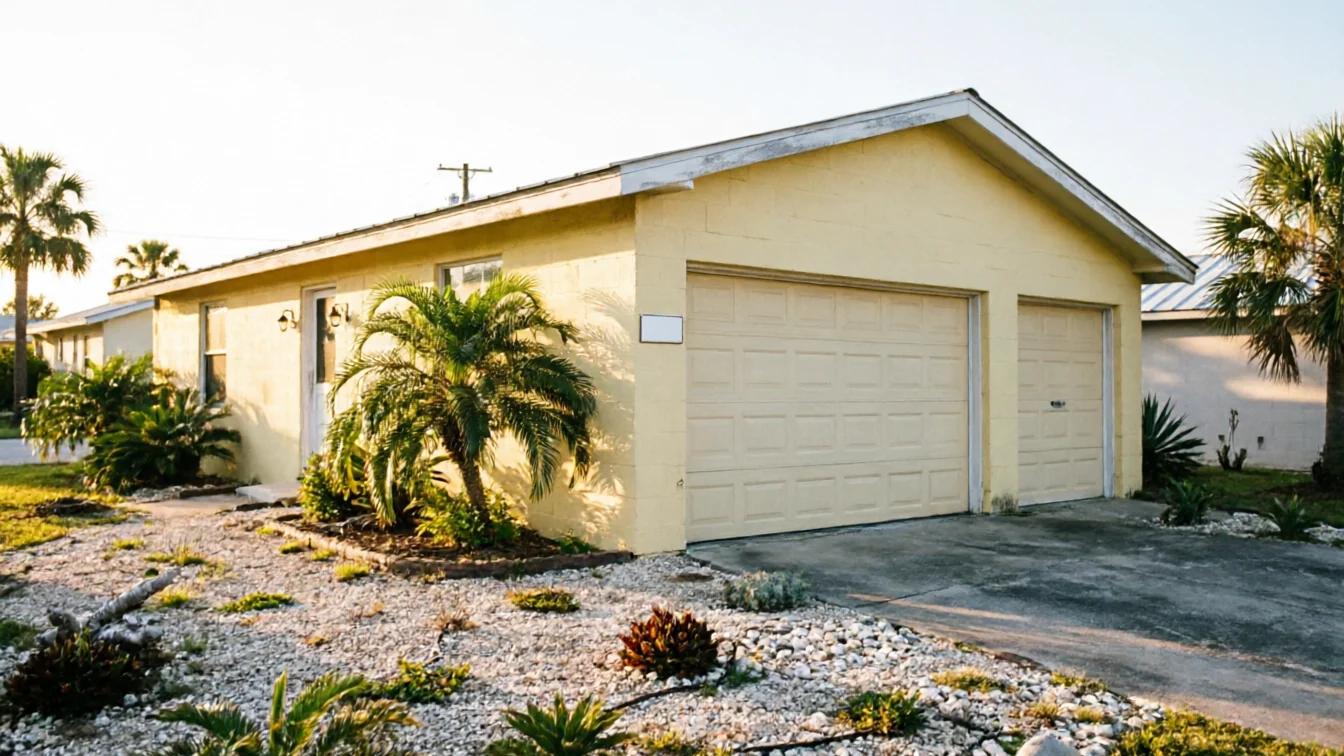
We carry standard galvanized aircraft cable in the common gauges and lengths used on residential sectional doors, plus the bottom brackets and standard torsion drums that fit most doors built in the 1980s-through-2000s range that make up DeBary's housing stock. What we don't keep on the truck is anything for older extension-spring setups or non-standard track heights - those get special-ordered, and we'll tell you up front if that's what your door needs so there's no surprise on timing.
Questions
Cables rarely snap without warning signs - they fray gradually at the drum groove or bottom bracket. If it felt sudden, the door was probably already dropping unevenly for weeks and nobody noticed until the last strand gave out. Once one cable goes, the other side is usually close behind.
No. Torsion springs store enough force to cause serious injury when a cable releases under tension. This is one of the jobs where the cost of a service call is cheaper than the cost of a trip to the ER.
We carry standard torsion drums and cable lengths that fit most doors from the 1980s through 2000s, which covers the bulk of DeBary's housing stock. Non-standard sizes sometimes need a short parts wait.
We run out of Sanford, about 7 miles from DeBary, so there's drive time built into any appointment rather than an immediate on-site arrival.
Explore more
Ready when you are
Sanford Garage Door Pros repairs and installs garage doors, springs and openers in Sanford, FL and the surrounding area.