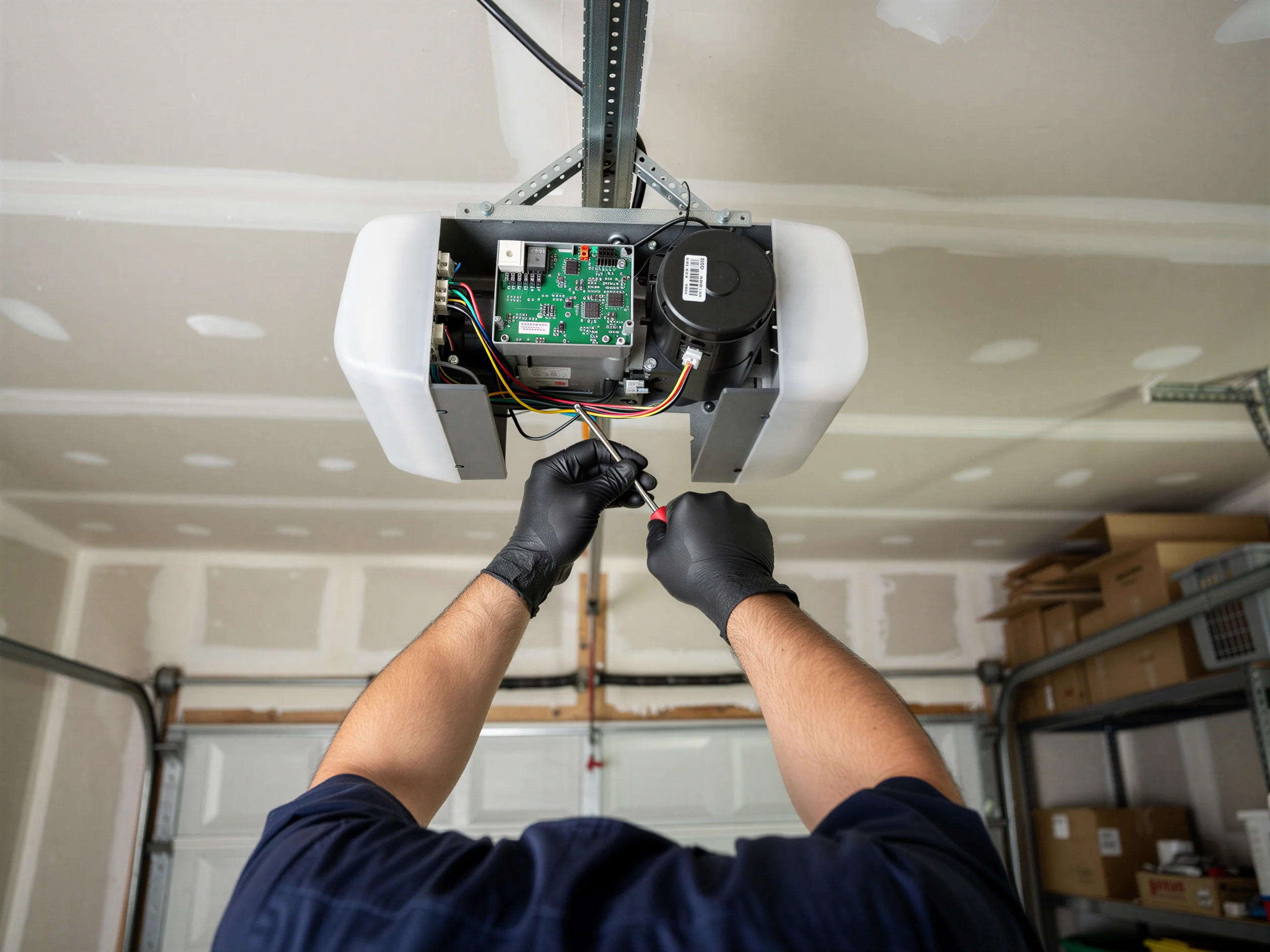
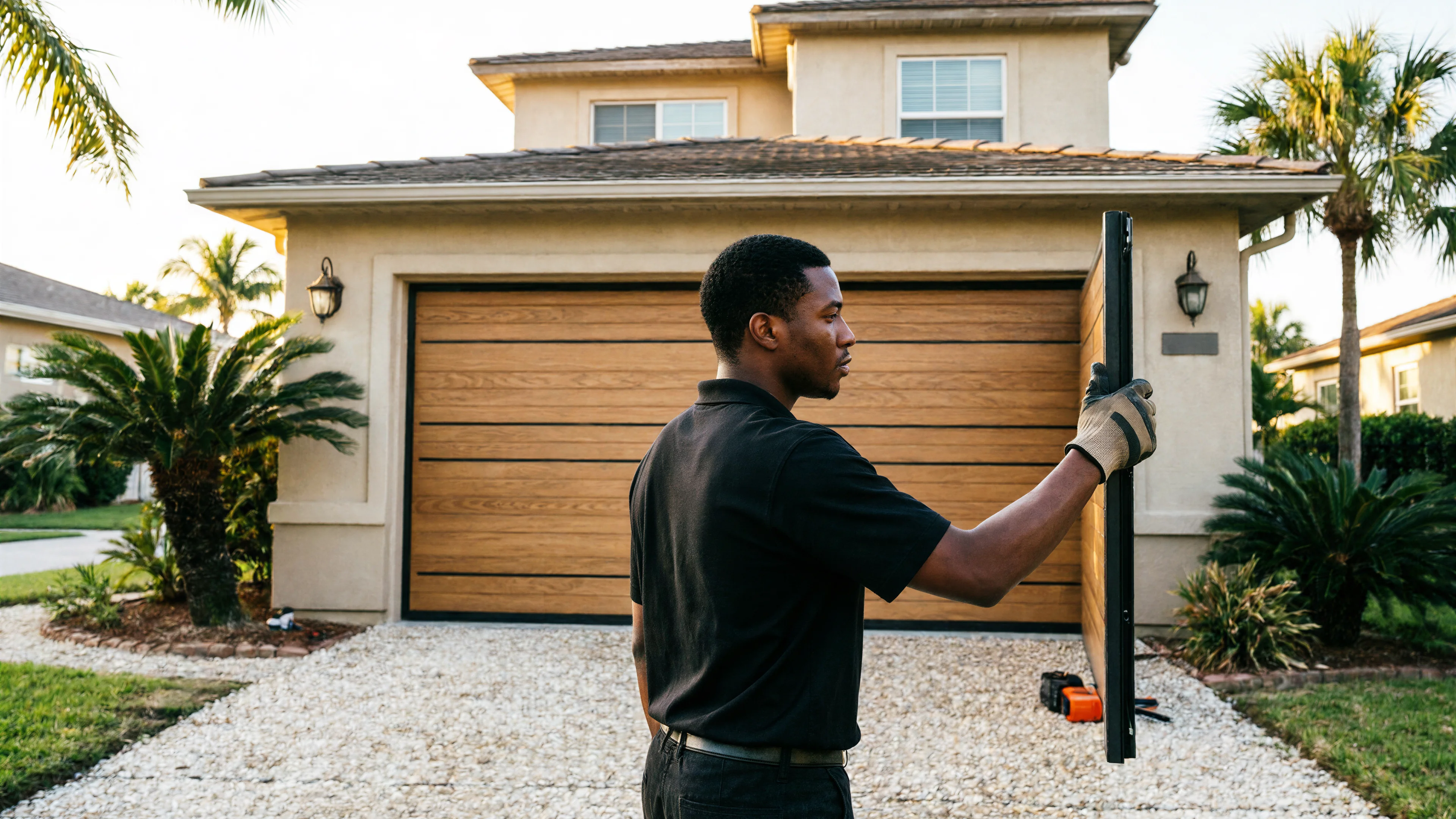
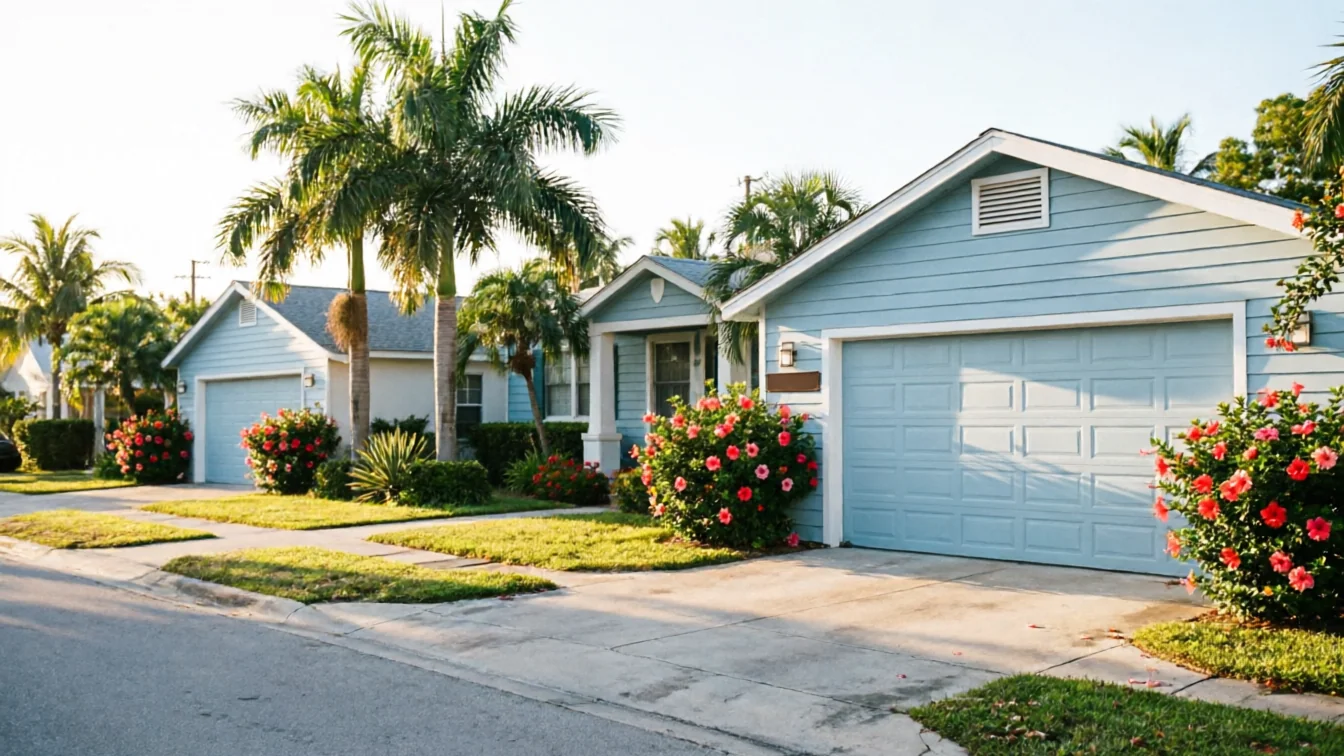
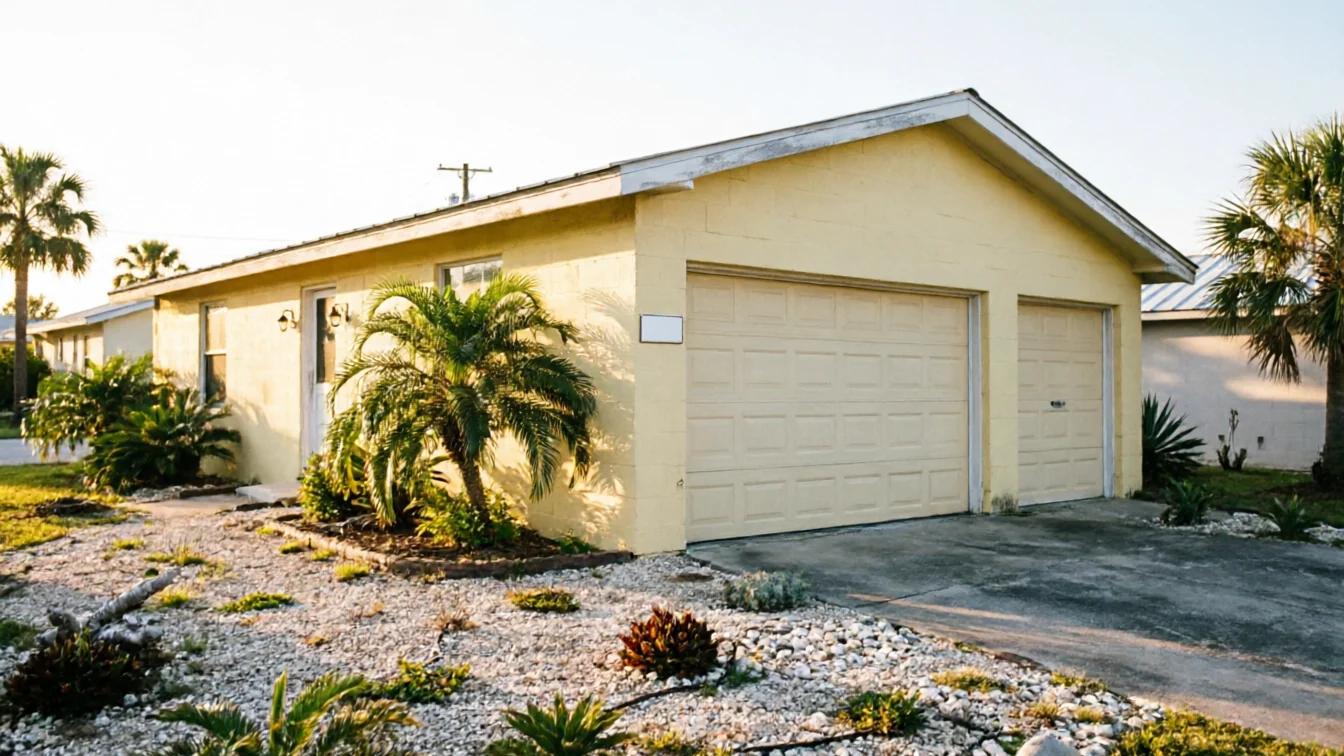
Central Florida's climate is classified as mild temperate, which is kinder to garage door hardware than a lot of the country - no hard freeze-thaw cycle to crack housings, no road salt corroding brackets. But mild doesn't mean dry. Sustained humidity is still hard on the circuit boards inside 1990s-era opener units, which weren't built with the sealed, weather-resistant housings you see in current models. Capacitors swell, relay contacts pit, and the safety sensor eyes near the floor pick up moisture film that reads as an obstruction and refuses to let the door close. On a chain-drive opener from that generation, the chain itself is usually the first thing to go: stretched links cause a slap or jump, and a sagging chain eventually jumps the sprocket entirely. We also see dead travel-limit switches, which make the door reverse a few inches off the floor or stop short of fully opening, a wear pattern that shows up almost exclusively on original drives from that era rather than on anything installed since.