Where People Go Wrong
Most of the trouble we see starts with someone picking a door off a showroom photo instead of measuring what's actually on the house. Sanford's housing stock runs mostly 1966 to 2002, with a median build year around 1984, and that matters more than it sounds like it should. A door sized and hinged for a 1980s opening often doesn't drop straight into a house built in the late 60s or one from the early 2000s without adjusting the track and jamb hardware. People order a standard 16x7 because that's what the big box store stocks, then find out the original opening was framed a size off.
The other mistake is assuming the old springs and track can carry a new door. If your house falls on the older end of that 1966-2002 range, the torsion hardware is older too, and reusing it on a heavier insulated door is asking for an early failure. We'd rather tell you upfront that matching door to opening, and opening to hardware, takes a measurement visit before anyone talks model numbers. Skipping that step is the single most common reason a replacement job runs long or costs more than quoted. It's not exciting advice, but it's the one that saves the second trip.
What the Weather Here Does to It
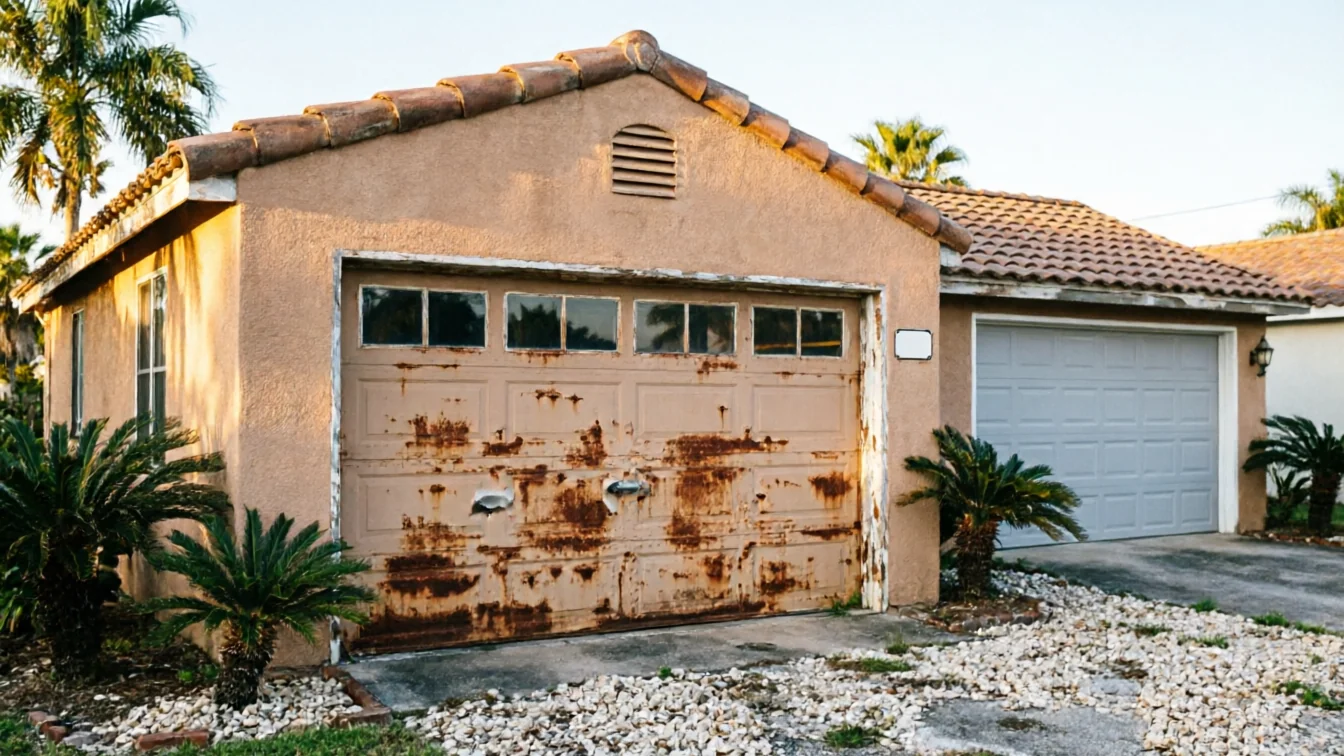
Sanford sits in a mild temperate band, not the extreme heat-and-humidity swings some parts of Florida deal with, and that changes what you actually need to spec on a new door. You're not fighting hard freeze-thaw cycling that cracks panels, and you don't need the insulation rating a northern climate would demand. What you do deal with is steady humidity working on steel over time, especially on doors installed in the 80s and 90s that are original to the house.
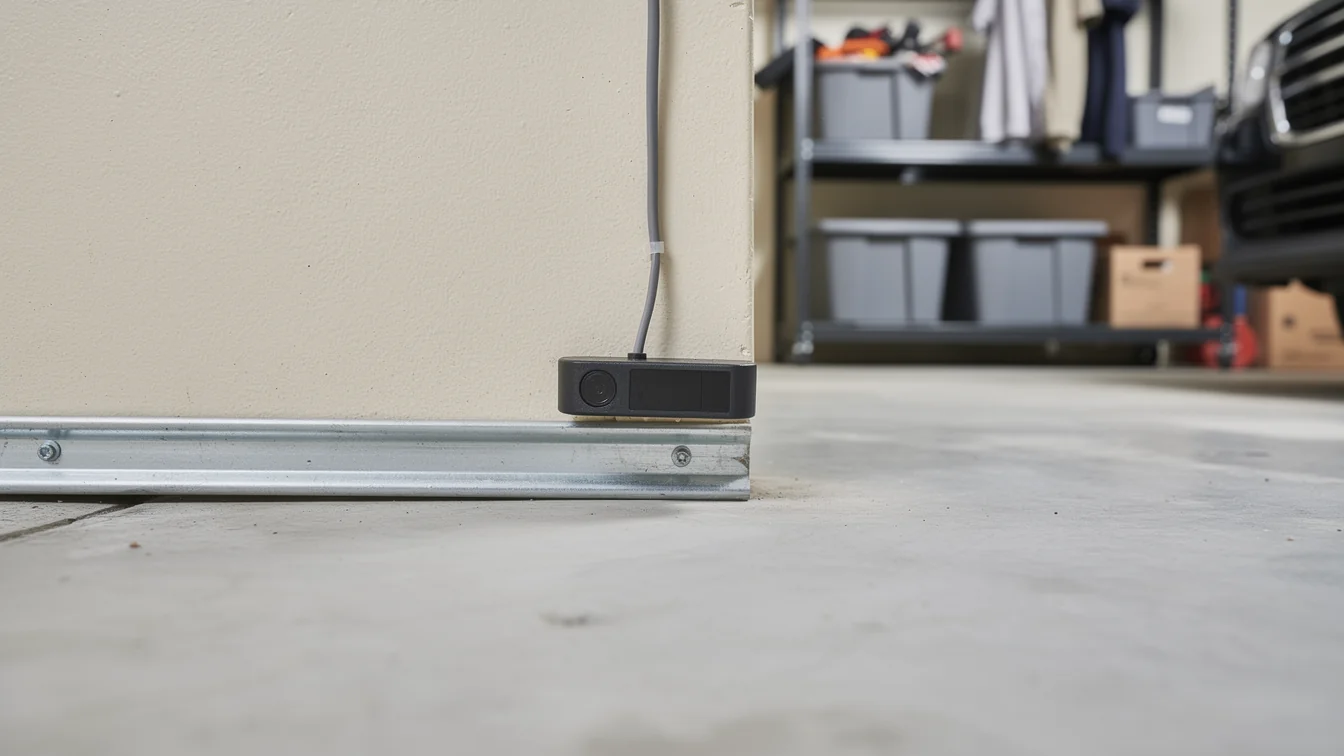
That means the failure pattern here is usually rust at the bottom panel and corrosion on hardware fasteners, not warping or cracking from freeze cycles. A new door doesn't need the thick polyurethane core some sellers push hard, since the mild temperate conditions don't demand it. Spending extra on an R-value built for a harsher climate is money that doesn't do much for you in this area. Galvanized hardware and a bottom seal that actually sits flush matter more here than insulation thickness. If a salesperson leads with R-value before asking about your house's age or the hardware underneath, that's a sign they're working off a script, not your actual door.
What It Costs
We don't have a flat number to hand you here, and giving you one without seeing the opening, the hardware, and the door style would be a guess dressed up as a quote. What we can tell you is what tends to move the number: whether the existing track and springs are salvageable, whether the opening matches a stock size or needs a custom frame, and which material and insulation level you pick.
Sanford's median household income across the service area runs around $80,775, and most of the jobs we see land in a mid-range door tier rather than the high end or the bare minimum - solid steel or wood-composite, standard hardware, nothing exotic. That's not a quote, it's just where most houses in this housing stock range end up landing once the opening is measured. If you want an actual number, that takes a look at the door in person. Anything else is a placeholder number that won't hold once we're standing in your driveway.
The Situation
If your house falls in that 1966-2002 build range that covers most of this area, your door is probably either original or a first replacement from the 90s or early 2000s, and either one is past the point where patching makes sense. A door that old has usually seen its springs replaced once already, its rollers worn down to the steel, and panels that don't seal the way they did new.
Replacement makes sense once repair costs start stacking up on a door that's already past its expected working life for its age. It doesn't make sense to replace a five-year-old door over a single broken spring or a dented panel - that's a repair call, not a replacement call. The honest answer depends on what's actually on your house, which is why we'd rather look at it than guess over the phone. We work across this part of Seminole County, from the areas closest to Sanford out through the wider service area, and the same build-year logic applies whether you're a few miles out or right in town.
Talk to a local pro
Garage door trouble in Sanford?
Same-day service with honest, upfront quotes.