Where People Go Wrong
The usual guess is a bent track. Sometimes that's it, but on the houses we work on around Sanford - most built between 1966 and 2002, with a lot of that stock going up in the 1980s and 90s - the track is often innocent. The real problem is the rollers and the hinges that hold the door to the track, and on a door that age those parts have usually never been swapped out once.
Homeowners tighten the track bolts, see the door run smoother for a week, and call it fixed. It isn't. If a roller is worn down to a nub or a hinge pin has walked halfway out, the door will ride the track unevenly no matter how straight the rail is. Pushing the track back into line without addressing the roller that knocked it there just buys you a few weeks before it happens again.
The other mistake is assuming a double garage door behaves like a single. A two-car door is heavier and has more linear track to stay true to. On the older builds common here, that door is often still running on the original 1980s-era hardware, and that hardware was never rated for the decades of cycles it's since seen. When one side starts dragging, the whole door twists against the track instead of sliding.
What the Weather Here Does to It
Sanford sits in a mild temperate band - we don't get the hard freeze-thaw swings that crack concrete slabs and shift anchor bolts in colder states. That's a real advantage, and it means a lot of track misalignment here isn't weather-driven the way it would be up north.
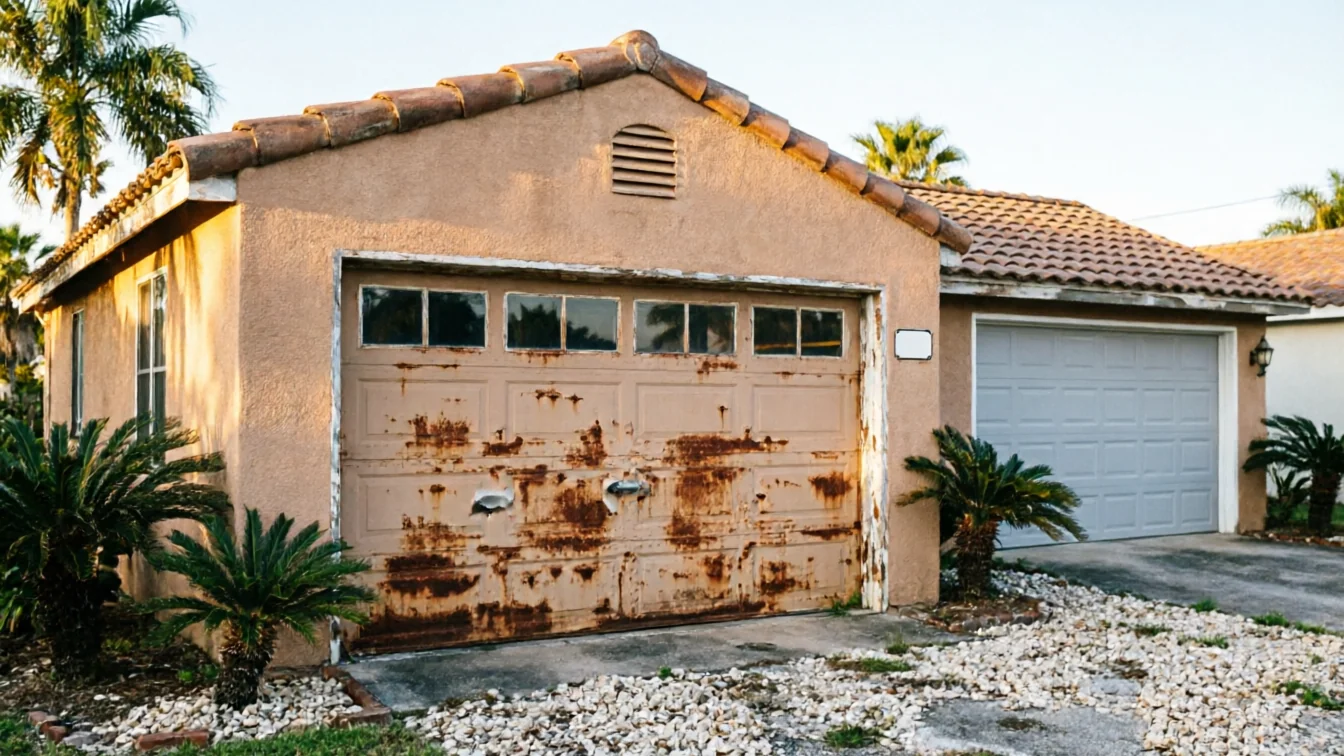
What we do get is humidity that doesn't let up, and that matters more for a garage door than most people think. Steel track and hardware that sit in a humid garage for thirty-plus years corrode quietly at the mounting brackets and roller stems, even without visible rust on the surface. On houses from the 1966-2002 build range, that slow corrosion is often what finally lets a bracket shift enough to pull the track out of plumb.
So the mechanism here isn't ice heaving a slab - it's humidity working on hardware that's been in place since the Reagan administration in a lot of these neighborhoods. The track doesn't usually fail all at once. It drifts a few degrees over years until one day the door catches, jumps a roller, and you hear the bang.
What It Costs
I'm not going to give you a number here, because the honest answer is it depends on what actually failed - and on a door this age, the track is rarely the only thing worn out. A roller swap is a small job. Realigning a bent track section is a bigger one. If the hinges and rollers are original to a house built in the 1980s stock common around here, replacing the track alone without replacing the worn hardware feeding it is a false economy - it'll be off again within months.
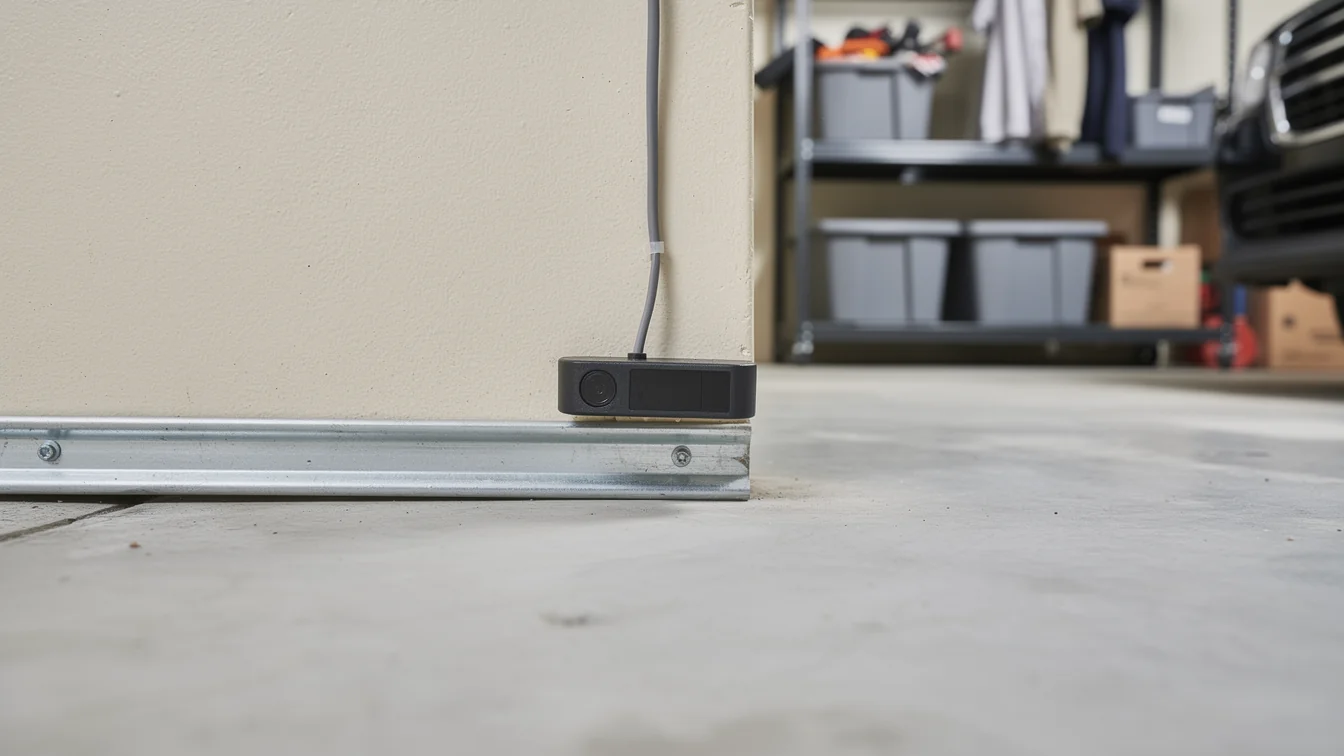
What I can tell you is how to tell which job you've got before anyone shows up: look at the rollers through the gap between the door and the frame. If they're chipped, flat on one side, or the stems are rusted where they meet the bracket, you're looking at a hardware job, not just a track job. If the track itself has a visible kink or gap from the wall, that's a separate repair and sometimes means the bracket pulled loose from the framing.
Either way, don't let anyone quote you blind over the phone for a door this age without asking about the rollers and hinges specifically.
The Situation
Across the service area there are roughly 76,055 owner-occupied houses sitting on a housing stock that runs 1966 to 2002, median year 1984. That's a lot of garage doors built, and refitted with hardware, in an era before today's heavier-duty rollers and sealed bearings were standard. If your door is original to the house, it's very likely past the point where track alignment is a standalone fix.
The good news, if there is one, is the climate here isn't actively fighting you. A door that's properly rehung and has its rollers replaced on a house like this should hold alignment for years, not months, because we're not dealing with frost heave or hard freeze cycles working against the slab. The failure, once corrected properly, tends to stay corrected.
I won't pretend every off-track door needs a full hardware replacement - plenty of times it's one bad roller and a ten-minute fix. But on a door that's been in a Sanford garage since the 80s or 90s, assume the hardware is the suspect until you've actually looked at it, not the track.
Talk to a local pro
Garage door trouble in Sanford?
Same-day service with honest, upfront quotes.