
Missing reversal sensors
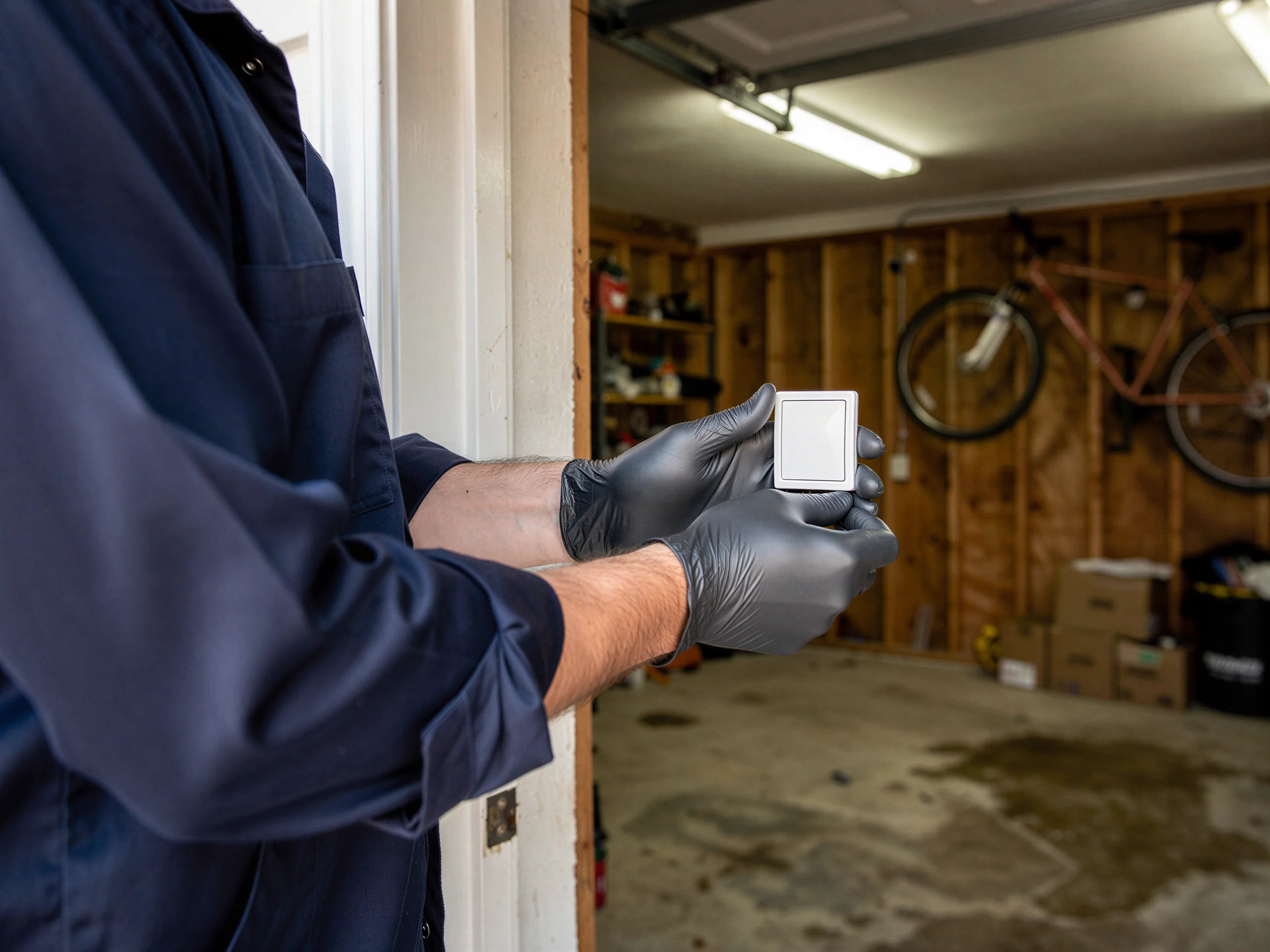
On houses from the 1980s and 90s stock common across this area, we also see openers that still physically run but have no safety reversal sensors at all, since those weren't standard equipment when these units went in.
 Sanford, FL
Sanford homes built 1966-2002 often run openers older than the house itself. We install replacements sized for the doors this area actually has.
Local causes
Most of the houses across this service area went up between 1966 and 2002, with the median landing around 1984. That one fact shapes almost every opener call we get. A chain-drive opener installed when a Sanford-area house was built in the 1980s has a motor and gear set rated for a lifespan that's already behind it by now. Across the 31 named areas we cover, the stock is overwhelmingly 1980s-90s construction, which means a huge share of openers out there are either original units nobody's touched or a single replacement done decades ago.
The mild temperate climate here doesn't put the same stress on an opener that you'd see in a place with hard freezes or extreme humidity swings, so these units don't fail from weather the way springs and cables do. They fail from age, worn gears, and drive systems that were never built to run this long. When a homeowner calls about a door that won't respond to the remote, or one that reverses halfway up, the root cause is almost always a motor and logic board that's simply outlived its working life inside a house from that same era.
Newer subdivisions built since the 2000s skew the picture a little, but the bulk of calls for opener installation - rather than opener repair - come from houses sitting right in that 1966-2002 band, where the original hardware is finally done.
Warning signs
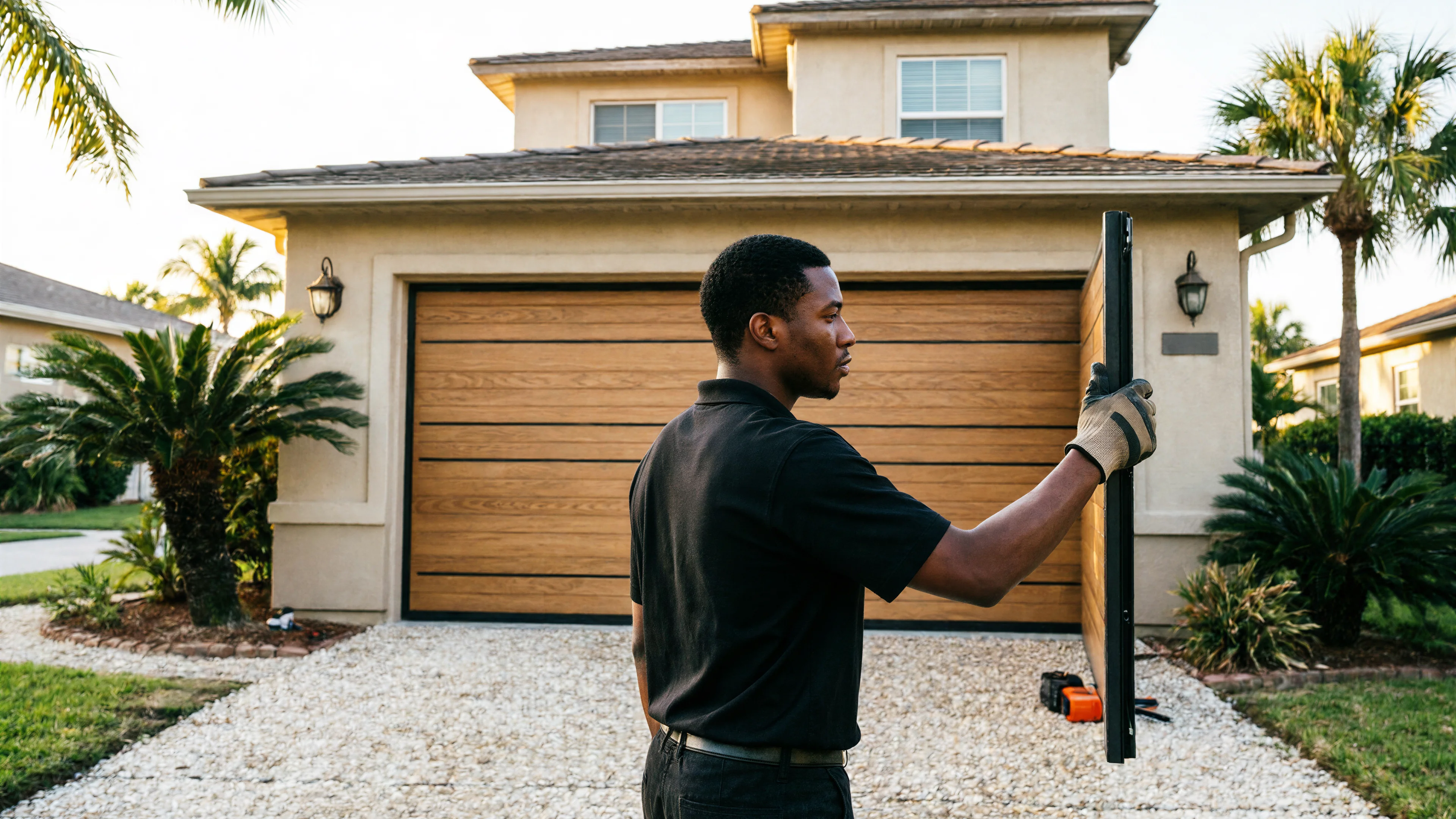
The first sign is usually inconsistency, not total failure. The door responds to the wall button but not the remote, or it works in the morning and sticks by afternoon.
On houses from the 1980s and 90s stock common across this area, we also see openers that still physically run but have no safety reversal sensors at all, since those weren't standard equipment when these units went in.
Another pattern: grinding or straining noises as the motor works harder to lift a door it was sized for decades ago, especially if the door itself has been upgraded to a heavier insulated panel since the opener was installed. The motor hasn't changed, but the load has. Sometimes it's quieter than that.
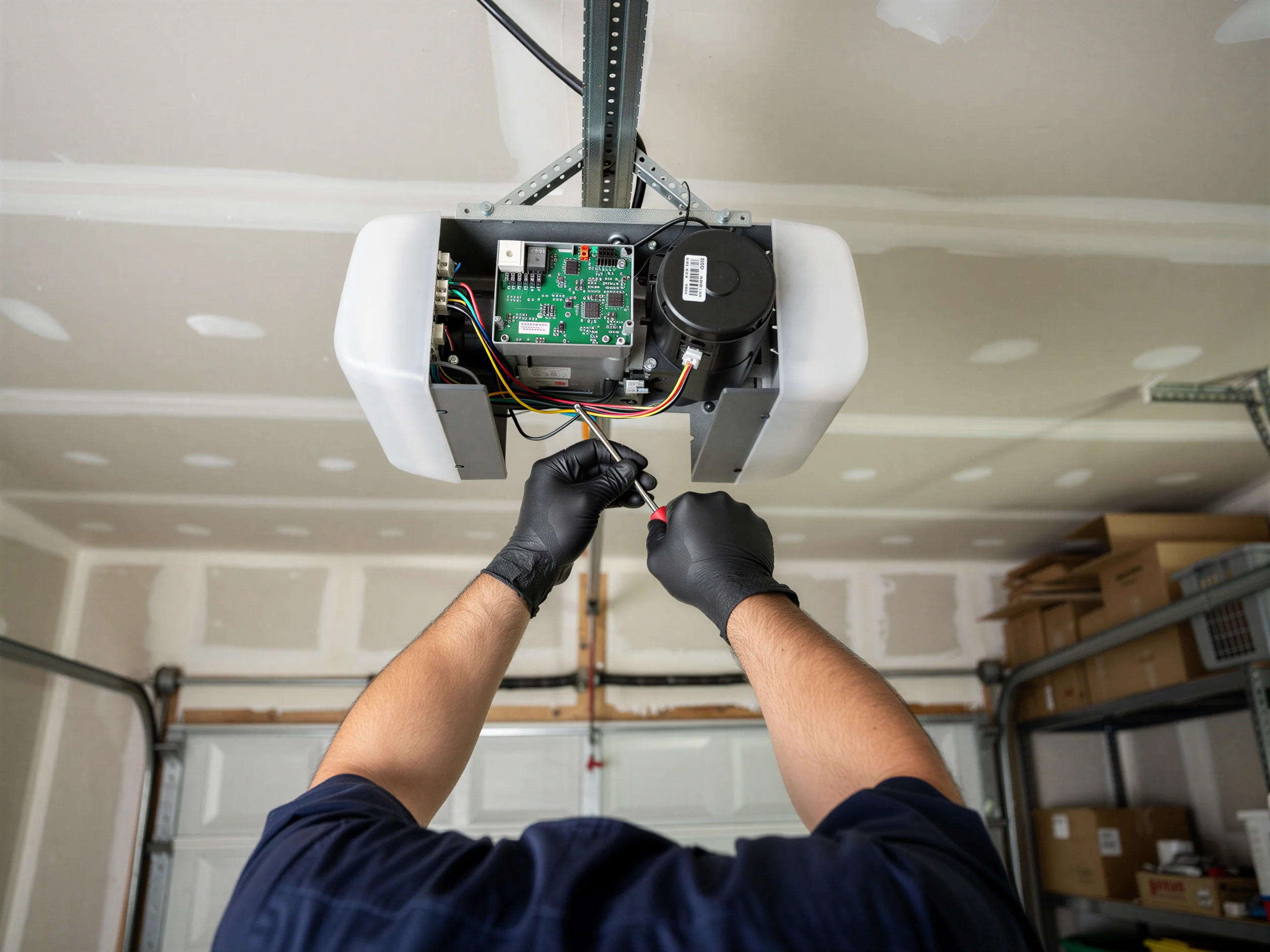
The opener just stops logging remotes, or the keypad goes dead, and the owner assumes it's a battery or a wiring issue. Often it's the control board itself, original to a house built well before smart-home compatible openers existed. At that point, the question isn't which part to replace - it's whether the unit is worth repairing at all, which leads into the next section.
Watch-outs
Opener installation in a house from this area's typical 1966-2002 range isn't always a straight swap. The header above the door, the bracket spacing, and the door weight itself were all engineered around whatever opener shipped with the house, and that's often not what's sold today.
We run into mounting brackets that need modification, door panels heavier than what the old opener was rated for, and wiring runs that predate any dedicated circuit for the unit.
Across the roughly 76,055 owner-occupied houses in this service area, we also see a fair number of garages that were converted or extended at some point after the original build, which changes the ceiling height, the track angle, or the clearance the new opener needs to clear.
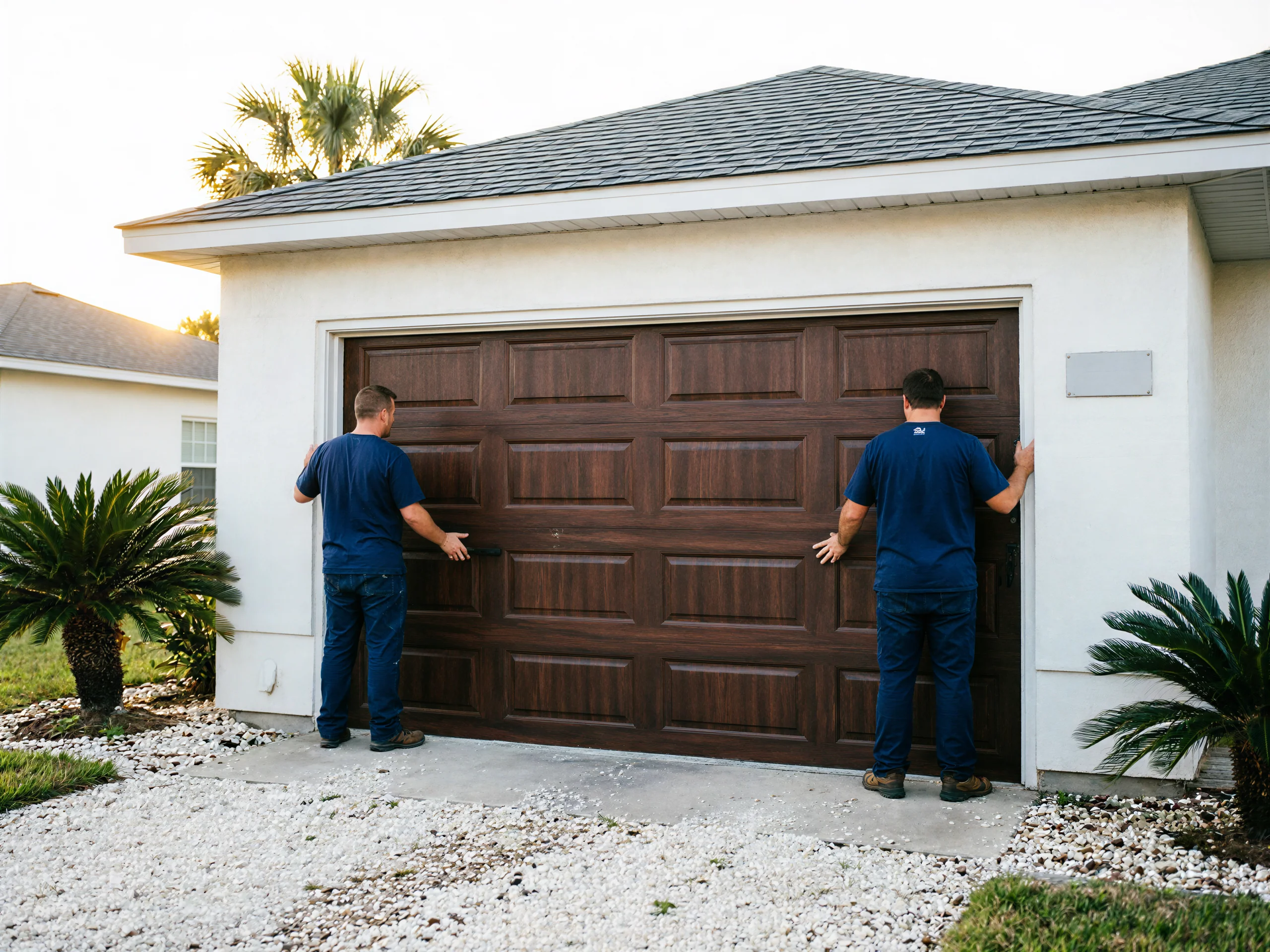
Here's the honest limitation: if your door panel itself is warped, off-track, or the springs are shot, a new opener installed on top of that won't fix the real problem and may fail faster than it should. We'll tell you when the opener isn't the actual issue, even if that means a smaller job than you called about.
Pricing
We don't publish a flat number here because the job isn't flat. What drives the cost on any opener install in this area is the same handful of variables every time: whether we're matching existing brackets and wiring or running new, whether the door itself needs any adjustment to work with the new unit, and which drive type and feature set you choose.
With median household income across the service area at $80,775, we see a real mix of homeowners choosing mid-range chain-drive units and others opting for belt-drive or smart-enabled openers with battery backup.
Neither is wrong - it depends on how much noise matters to you and whether you want app control. For an exact number, we'd need to see the door, the header clearance, and the current wiring in person.
We don't quote opener installs sight unseen, because a house built in 1975 and one built in 1998 - even a few streets apart - can need different hardware entirely.
Questions
If the unit is original to a house built in the 1966-2002 range common across this area, parts are often obsolete and the motor's past its rated life anyway. We'll check the logic board and drive gear first - sometimes a repair holds, but on original equipment that old, replacement usually costs less over time than chasing failures.
Usually yes, but we check bracket spacing, header clearance, and door weight before we quote. Houses from the 1980s and 90s stock common here sometimes have brackets or wiring that need minor modification to fit a current opener model.
Not much directly - this is a mild temperate climate, so openers here don't face the freeze-thaw stress you'd see elsewhere. Most failures we find are simply age and worn gears catching up with units installed decades ago, not weather damage.
Yes, alongside standard chain and belt-drive units. Which one makes sense depends on your garage's wiring and whether you want remote monitoring - we'll go over the options when we look at your setup in person.
Explore more
Ready when you are
Sanford Garage Door Pros repairs and installs garage doors, springs and openers in Sanford, FL and the surrounding area.