
Water-soaked foam cores
Water is the other giveaway. If the bottom panel has been sitting in standing water after rain, even briefly, the foam core soaks it up and the panel gets heavier on one side than the other.
 Sanford, FL
Sanford's housing stock runs 1966-2002, mostly 1980s-90s builds, with steel panels that dent and delaminate in the mild Florida climate. Panel replacement done right, not guessed at.
Local causes
Most of the houses in this service area were built between 1966 and 2002, with the bulk of that stock going up in the 1980s and 90s. That generation of garage door came with steel panels in a handful of standard widths, and the foam-core insulation used in that era bonds to the steel skin in a way that doesn't age well. Add a mild temperate climate with regular humidity swings and you get a specific failure pattern: panels that look fine from across the driveway but have delaminated between the steel face and the foam backing, so they flex, oil-can, and let the bottom panel take on water weight.
It's not storm damage in most cases. It's thirty-plus years of a door doing its job in a climate that never freezes but never stays bone dry either. A homeowner backing out in a hurry, a bike leaned against the door, a kid's basketball - those dents happen everywhere. What's specific to this area is how many doors from that 1980s-90s build wave are now old enough that one bad panel is the first sign the rest aren't far behind.
We see it most on the original builder-grade doors still running their first set of panels. If your door has never had a panel swapped, and the house dates to that window, you're due for one eventually.
Warning signs
The first sign is usually a horizontal dent or a crease across one panel, low on the door where cars and bikes make contact. On the older 1980s-90s steel doors common in this area, that dent doesn't stay cosmetic for long - the crease work-hardens the metal and the panel starts to buckle slightly every time the door cycles, which throws off the roller alignment on that section of track.
Water is the other giveaway. If the bottom panel has been sitting in standing water after rain, even briefly, the foam core soaks it up and the panel gets heavier on one side than the other.
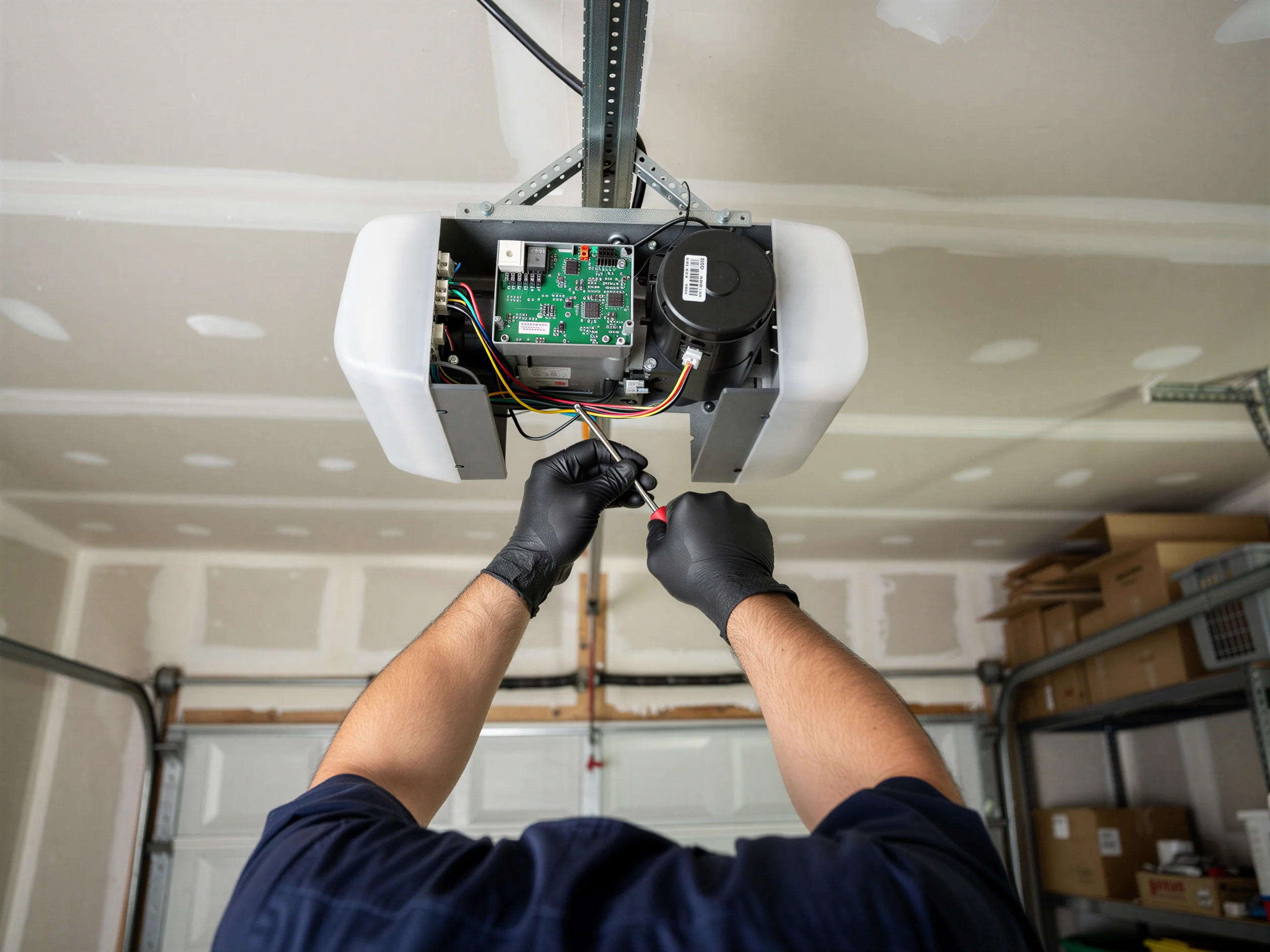
You'll notice the opener straining more than it used to, or the door closing a little crooked. On a door with no insulation core, you'll instead see straight rust streaks along panel seams where the steel coating gave out first.
Sometimes it's just age catching up - the paint has chalked, the panel profile doesn't match newer replacement stock from the same manufacturer, and one section looks visibly different from the rest even before anything's physically wrong. That mismatch is common enough on doors from this build era that matching an exact panel can take more digging than people expect.
Watch-outs
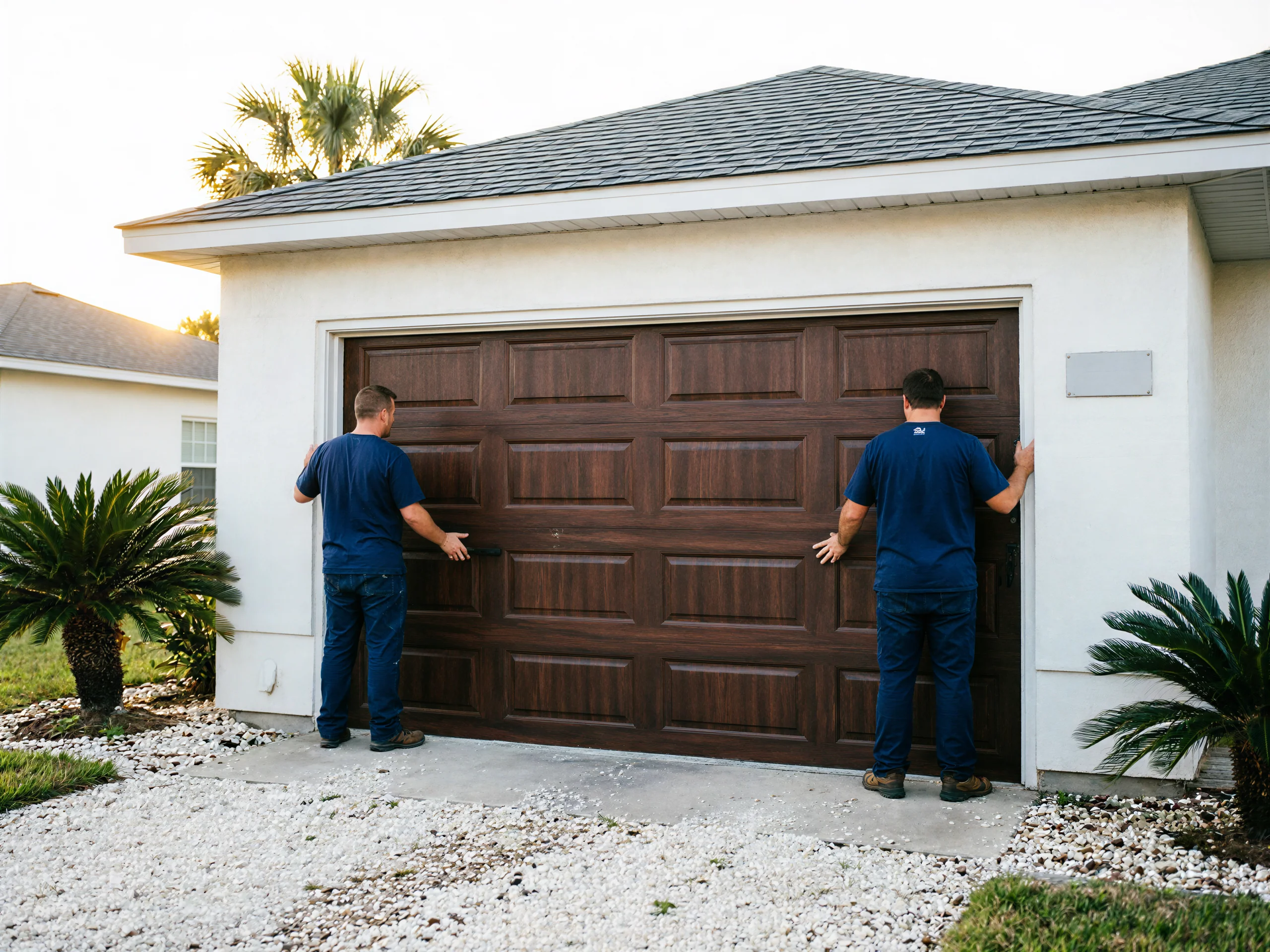
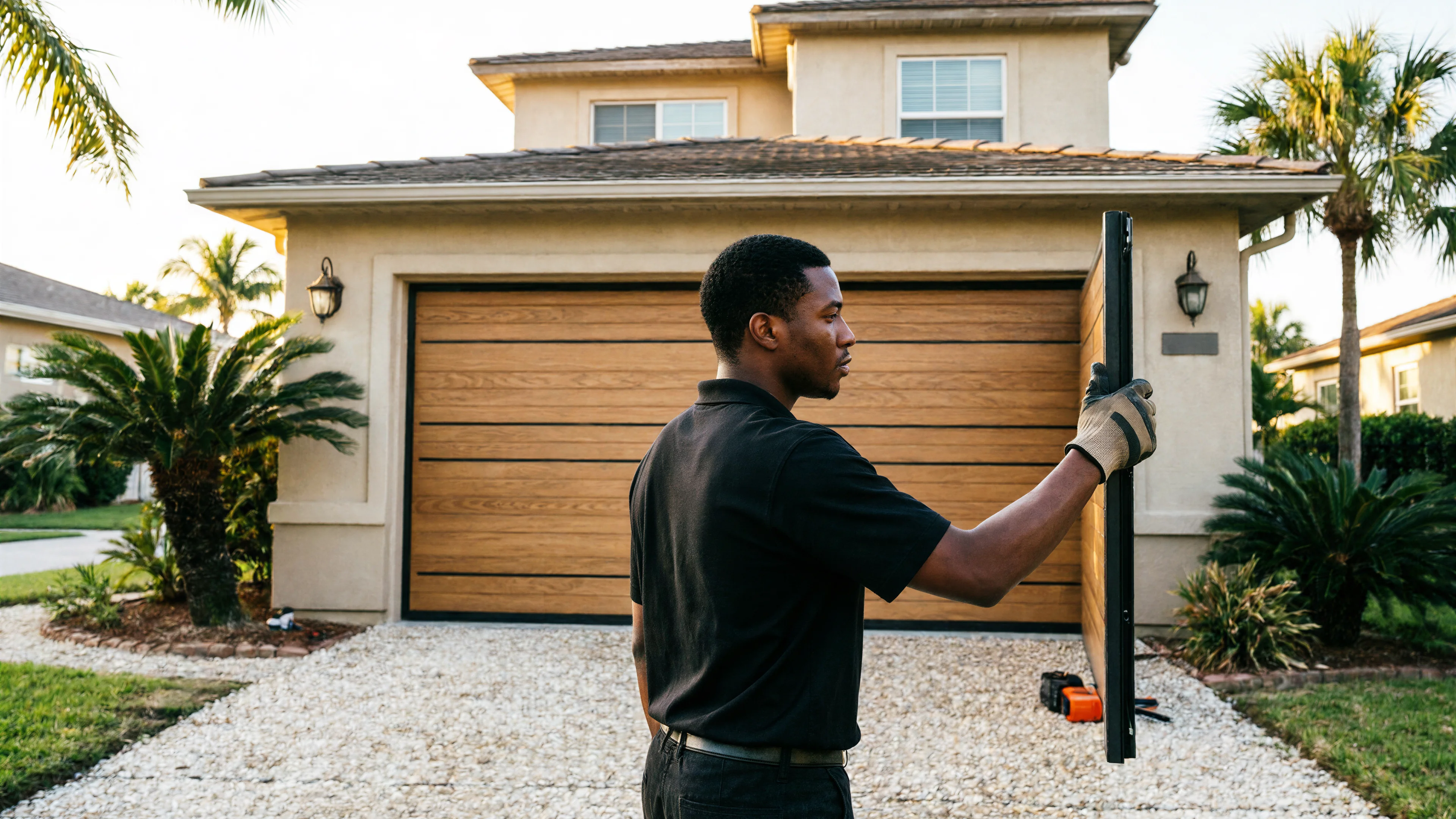
Panel replacement sounds like a straightforward swap until you're standing in front of a door built in the 1980s or 90s and the manufacturer doesn't make that panel profile anymore.
A lot of builder-grade doors from that window were regional or contractor-direct brands, and finding a matching panel - same width, same groove pattern, same color - isn't guaranteed. Sometimes we can source an exact match. Sometimes the closest we can get is a visible seam between old and new steel, and that's a conversation we have with you before any ordering happens, not after.
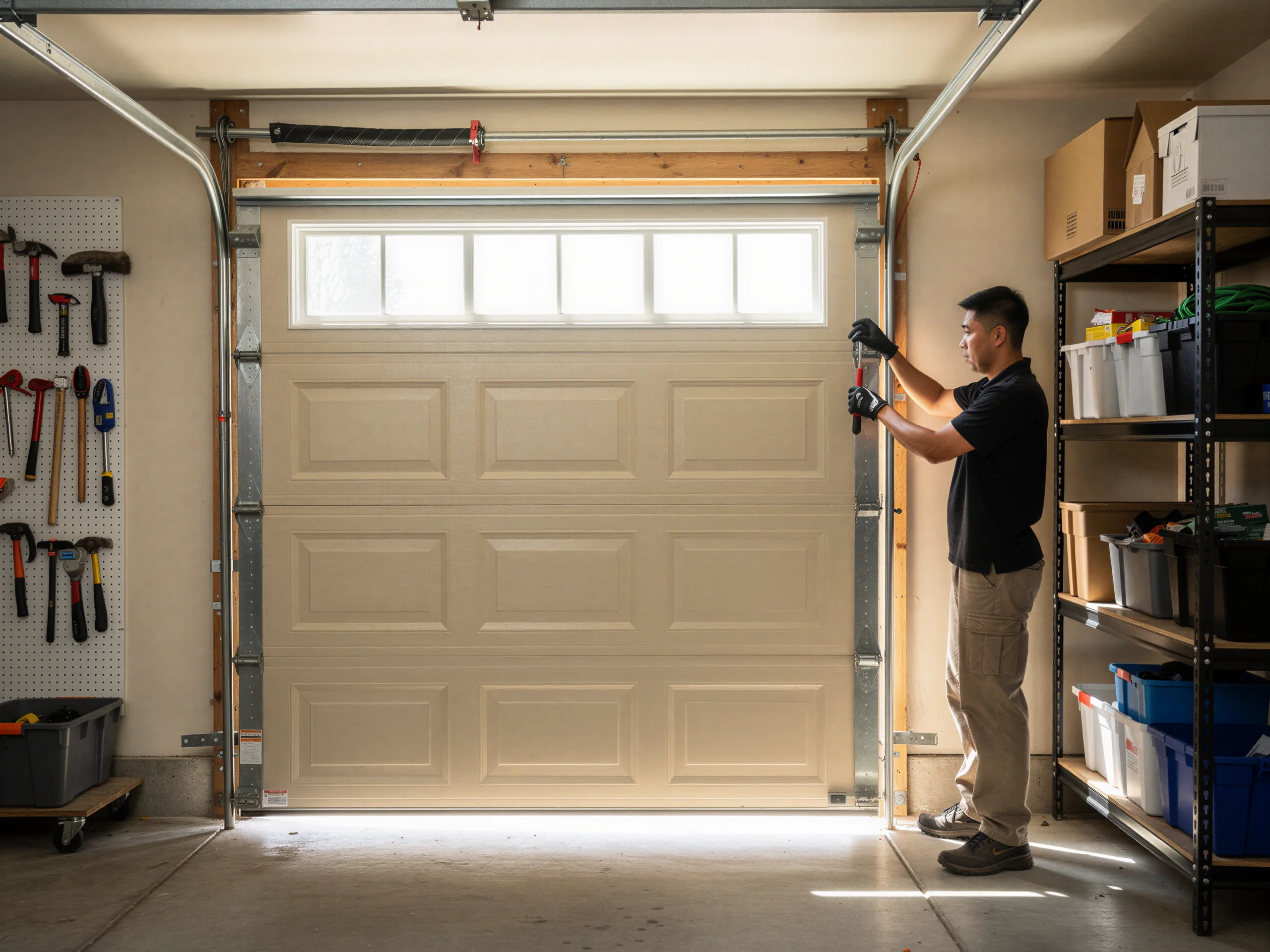
The other complication is structural. A single damaged panel on a long-span double door carries more load than people assume, and replacing just that section means working around torsion spring tension and track alignment that's often been quietly compensating for the bad panel for months. Get the panel in without resetting that alignment and the door will fight you within a season.
We'll also tell you straight when a panel swap isn't worth it: if two or more panels are damaged, or the door's insulation core is breaking down across the board, patching one panel is a short-term fix on a door that needs replacing. We'd rather say that upfront than sell you a part that buys six months.
Pricing
We don't quote a panel replacement price without seeing the door - the range depends on whether your panel is a common stock profile or a discontinued match, whether it's insulated or single-layer steel, and whether the track and spring tension need resetting as part of the job.
A door from the 1980s-90s build wave common across this area is more likely to need a special-order panel than a door built in the last decade, and that affects both lead time and cost. What we can tell you is how we price it: we look at the door in person, identify the panel profile and manufacturer if it's visible, and give you a number before we order anything.
If an exact match isn't available, we'll show you the alternatives - a close match with a visible seam, or a full panel-set replacement that keeps the door uniform - and let you decide which tradeoff is worth it for your driveway.
The honest limitation here is lead time, not price: a discontinued panel profile can take longer to source than a same-day repair, and we'll tell you that number as soon as we know it, not after you've waited.
Questions
On doors from the 1980s-90s build era common in this area, the steel skin work-hardens once it's creased, so the same spot flexes again every time the door cycles. It's not bad luck repeating - it's metal fatigue in a panel that was already compromised the first time it dented.
Sometimes. A lot of builder-grade doors from the 1980s and 90s used profiles that specific manufacturers no longer make. We check what's available before ordering anything, and if an exact match isn't out there, we'll show you the realistic alternatives and the tradeoffs up front.
Not always, but on a door old enough to be part of the original 1980s-90s build wave, one failed panel often means the others are at a similar point in their lifespan. We'll tell you honestly whether a single-panel swap makes sense or whether you're better off planning for the whole door.
Either, depending on the damage and whether a matching panel exists. If two or more panels are compromised, or the core insulation is breaking down across the door, we'll usually recommend a full panel-set swap rather than patching one section that'll be followed by another.
Explore more
Ready when you are
Sanford Garage Door Pros repairs and installs garage doors, springs and openers in Sanford, FL and the surrounding area.