Where People Go Wrong
Most calls start the same way: the opener stopped working and the owner assumes it's the remote or a dead battery in the wall sensor. In a lot of Sanford homes that's not it. Housing here was built between 1966 and 2002, with the median landing around 1984, so a large share of openers on the market now are original builder units or a first replacement from decades back. Those motors run on circuit boards that weren't designed with the diagnostics modern units have - no blinking error codes, just a hum or nothing at all.
The mistake is spending money on sensors or remotes before checking the board itself. If the unit is from that original build era, the logic board is usually the actual point of failure, and no amount of sensor realignment fixes a board that's done. The other common error: people keep replacing parts on a 20-plus-year-old opener instead of swapping the whole unit, which often costs less in the long run than three separate repair visits.
One limit worth saying plainly: we don't carry parts for every discontinued board out there. Some older units just aren't serviceable anymore, and that's a replacement conversation, not a repair one.
What the Weather Here Does to It
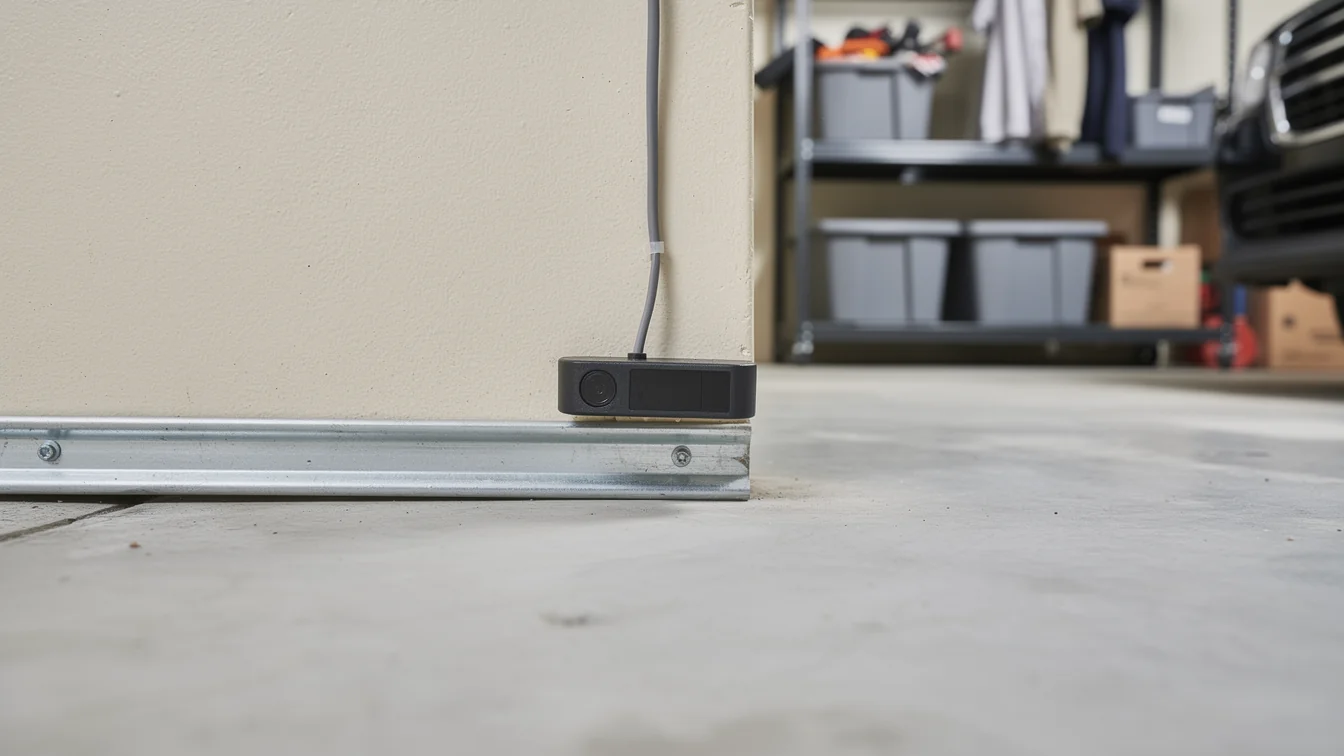
Sanford sits in a mild temperate band, so openers here aren't fighting hard freezes or sudden cold-starts the way units up north do. That's the good news. The bad news is humidity sits in the garage most of the year, and that works on the opener's electronics slower but just as surely - corrosion on contact points, swollen circuit boards, sensor eyes fogging and throwing false obstruction readings.
Because the stock here mostly dates to the 1980s and 90s across the area, a lot of these openers were installed before battery backup was a standard feature. That matters more than people expect: when the power cuts, even briefly, a unit without a backup battery won't open or close on its own, and the manual release cord becomes the only way in or out until the power's back. It's not a weather-driven failure in the way a hurricane strip or wind rating is - it's a feature gap from the install date, and it shows up during any outage, not just a big storm.
If your opener predates battery backup, that's worth knowing before the day it matters.
What It Costs
We're not going to put a number on this that doesn't match what you'll actually be quoted, because it depends on too much: whether the board is replaceable or the whole unit needs to go, whether you want battery backup added, and what drive type is already on the rail. What we can say is the decision point is usually simple. If the opener is from the original build era for your house, a board-level repair on a motor that old is often money spent on a machine that's going to need something else next year. A full unit swap, done once, tends to be the better spend for anyone in a house from that 1966-2002 window.
We'll look at the unit, tell you straight whether it's a repair or a replacement, and give you the number for your specific situation before any work starts. No guessing over the phone.
The Situation
Sanford and the towns around it - Lake Mary, Midway, Heathrow, Longwood, Altamonte Springs - share a lot of the same housing timeline, which means the same opener problems show up block after block. With 76,055 owner-occupied houses among 175,363 households in this stretch of Central Florida, and a median household income of $80,775, most owners here aren't looking to overspend on an opener fix - they want to know if it's worth repairing and, if not, what a straight swap runs.
That's the call we're set up to make. We check the board, the drive, the backup situation, and the rail condition before we say repair or replace, and we don't pad a quote with work the unit doesn't need.
Talk to a local pro
Garage door trouble in Sanford?
Same-day service with honest, upfront quotes.