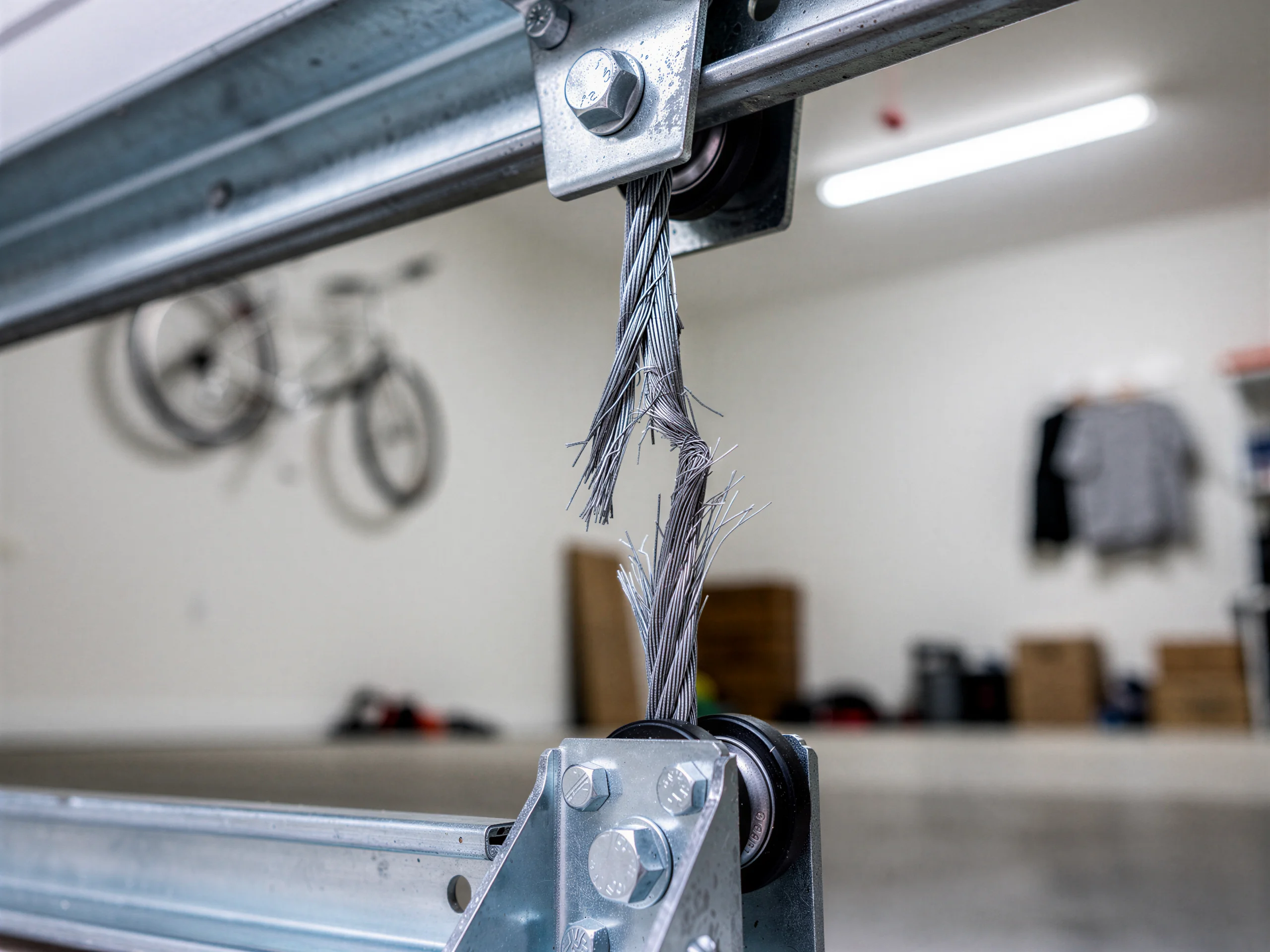
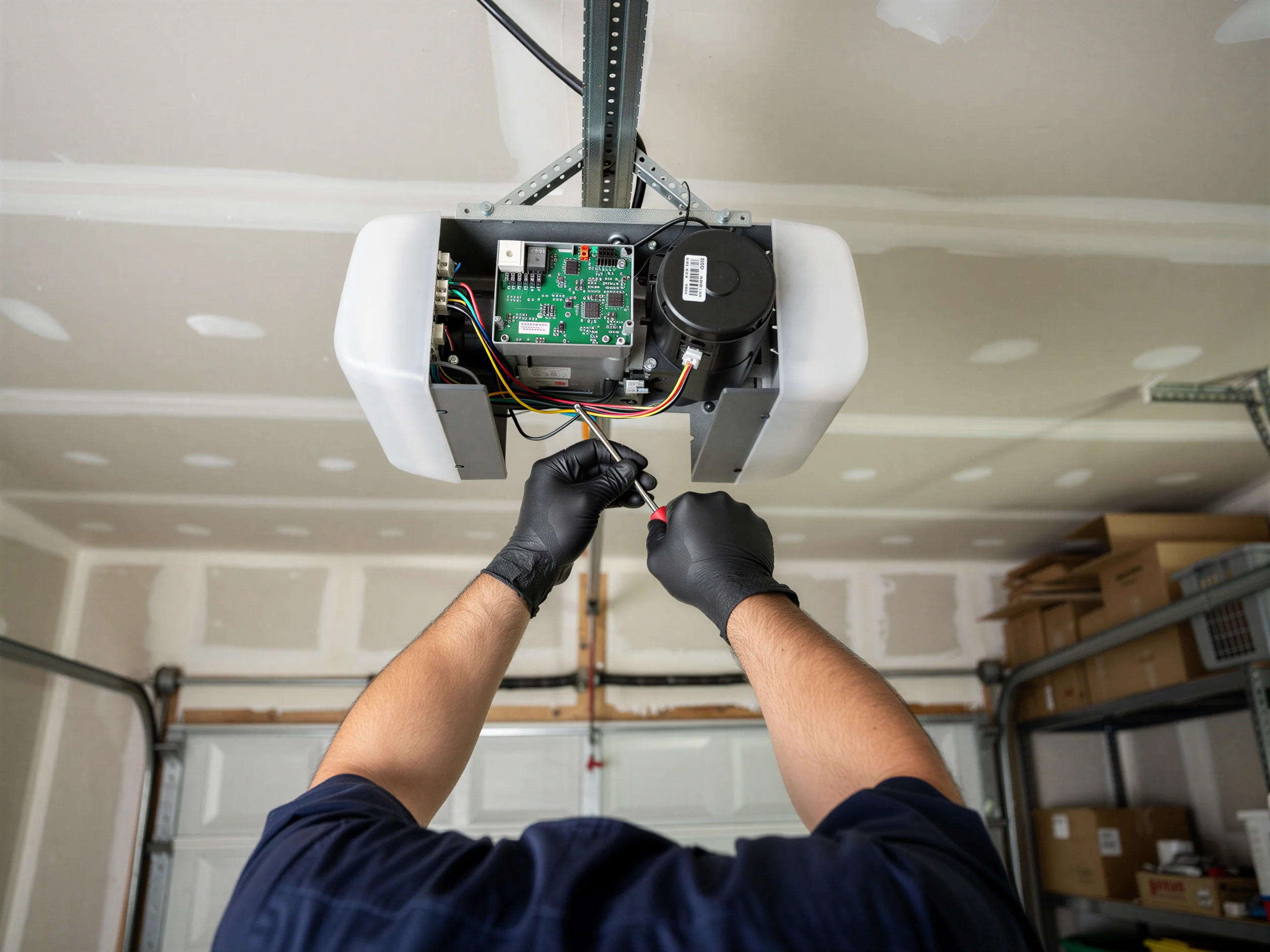
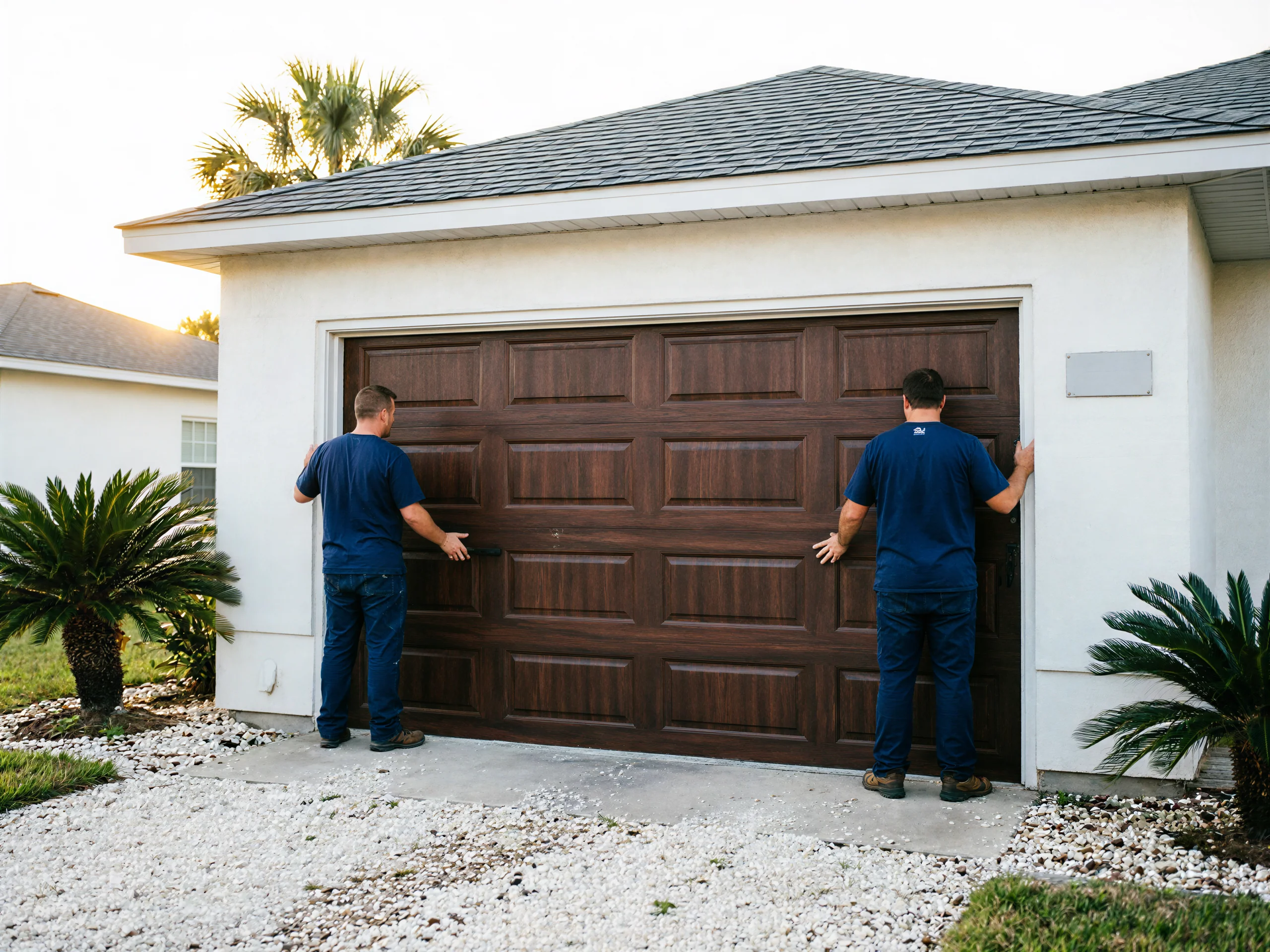
The service area sits in a mild temperate climate band, so we're not dealing with the deep freeze-thaw cycling that cracks panels or the kind of humidity swings that warp wood overlays elsewhere in the country. That's the honest upside. What it means here is slower, quieter failure - lubricant drying out in torsion springs over years rather than a dramatic snap, and nylon rollers wearing down on schedule instead of cracking from cold. Given that Lake Mary's doors mostly date to the late 1990s, we're usually past the point where original lubrication or factory-installed hardware is doing its job. Springs rated for a door's original weight start to sag in their wind count after two-plus decades of mild, steady cycling, which is less dramatic than sudden spring failure but just as likely to leave a door stuck halfway. Opener logic boards from that era are also reaching the end of their practical life, and a board failing often gets misread as a spring problem until we're on site. None of this is storm damage or code-driven - at $116,944 median household income here, we also see more owners replacing worn parts proactively rather than waiting for a full breakdown, which changes the kind of call we get.